Vendor selection11 min read
Hiring a Dev Agency Instead of an In-House Team
When a dev agency is worth it over an in-house team, and when hiring makes more sense
By Duncan
Key takeaways
The right choice depends on volume and predictability of work, not on which option sounds more serious or permanent.
In-house hiring costs more than the salary: recruitment time, management overhead, and the risk of losing a key person all add up.
Agency work trades some day-to-day control for speed, flexibility, and no fixed headcount cost.
Most growing businesses without a steady pipeline of development work are better served by an agency, especially one built around maintainable code.
A misjudged in-house hire is more expensive than people expect, and in-house teams need enough ongoing work to stay efficient.
Whether it's worth hiring a dev agency instead of an in-house team depends mostly on how much development work you have, and how steady it is. Once you look at the numbers honestly, the right answer tends to be clear for your situation.
When a dev agency is worth it instead of an in-house team
It's worth hiring a dev agency instead of an in-house team when your development work is uneven, project-based, or not yet enough to keep a full-time hire busy. An in-house team earns its cost when software is central to your business and there's enough steady work to justify paying a fixed salary every month, regardless of workload. Most growing businesses sit closer to the first case than the second, even if it doesn't feel that way from the inside.
Hiring in-house isn't the "proper" way to do things, with an agency as a stopgap. Both are legitimate ways to get software built. The only question that matters is whether you have enough predictable work to keep a salaried developer busy, and whether you can absorb the cost and risk of hiring one if that turns out to be wrong. If you're still weighing this up more broadly, it's worth reading about whether custom software development is worth it for a small business first.
The real cost of hiring in-house
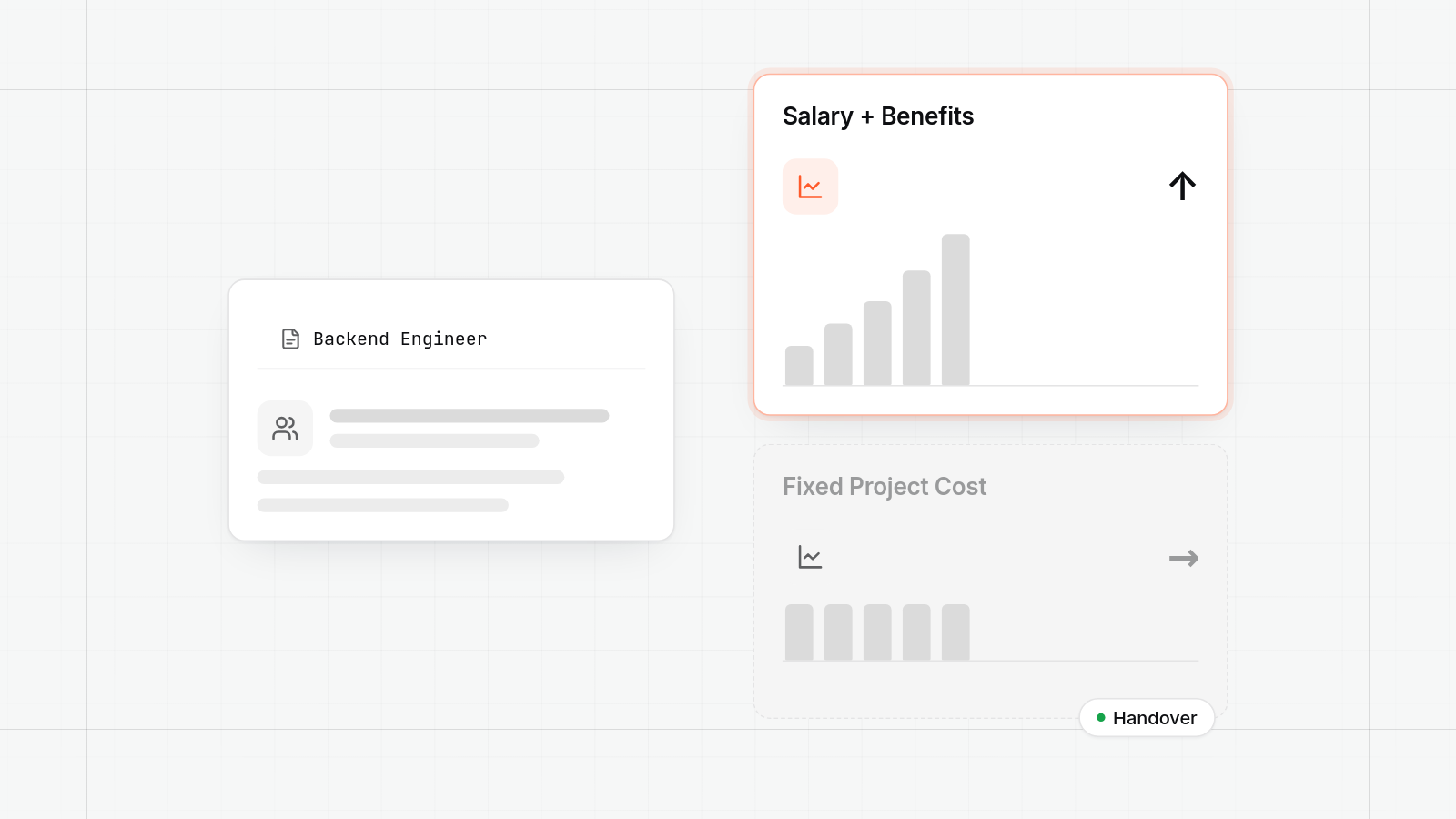
The real cost of hiring in-house is salary plus recruitment, management overhead, and the risk of losing a key person, not just the figure on the offer letter. A UK mid-to-senior developer typically costs £50,000 to £80,000 a year in salary alone. On top, add employer National Insurance, pension contributions, equipment, and benefits, which commonly adds another 20% to 30%. A £65,000 salary can easily cost £80,000 to £85,000 once everything is included.
Then there's the time to find them. Recruitment for technical roles commonly takes four to eight weeks from posting to offer, longer for senior or specialist roles. During that time nobody is writing code, but the role still costs you in recruiter fees, interview time, and delayed projects. If you use a recruiter, expect a fee of 15% to 25% of first-year salary on top of everything else.
Managing someone once they're hired isn't free either. Somebody has to set priorities, review work, handle one-to-ones, and deal with the gaps when that person is on leave, unwell, or stuck on something nobody else understands. If you don't already have a technical manager, that job often falls to the founder, which is its own hidden cost.
The biggest risk is what happens if the hire doesn't work out, or if they leave. A developer who's been with you two years often holds knowledge nobody else has: why a decision was made, how a system actually works, where the awkward parts are. When that person goes, so does the knowledge, and you're back to recruiting with a gap in delivery while you do it. This is sometimes called key person dependency, and it's one of the most underestimated risks in software hiring.
None of this means in-house hiring is a bad idea. It means the full cost is salary plus recruitment time plus management overhead plus the risk of losing the person who understands the system. Add those up before comparing against an agency quote, not just the headline salary.
The real cost of working with an agency
Per hour, an agency usually costs more than an in-house salary works out to, but it comes without the fixed costs and hiring risk sitting underneath that salary. You're not paying recruitment fees, benefits, pension contributions, or a salary that continues whether or not there's work to do. You're paying for output, on a project basis or a retainer, and that cost stops when the work stops. For a clearer sense of what that output costs, see what it costs to build a custom web application.
The trade-off is control. You don't get someone in your office, available for every ad hoc question, immersed in your day-to-day priorities the way an employee is. Communication has to be more deliberate. Decisions an in-house developer might make on the spot often need a conversation first.
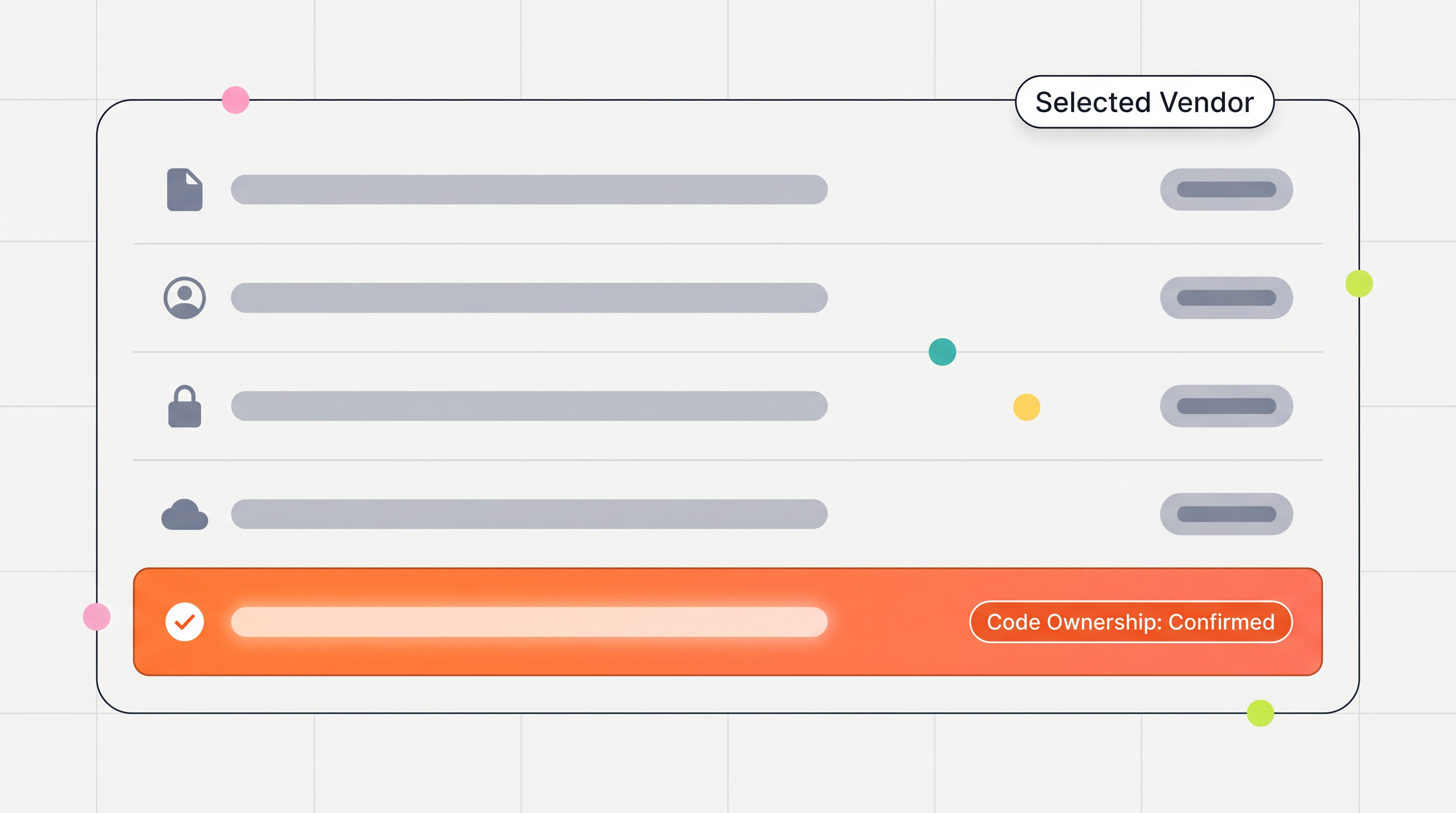
There's also a handover risk at the end of a project, or if you switch agencies. If code isn't documented clearly, or a vendor is cagey about who owns what, you can end up locked into whoever built it, unable to move it elsewhere without starting again. This is avoidable: ask directly who owns the code, the repository, and the infrastructure once the project ends, and get a straight answer before you sign anything.
A good agency mitigates most of this by writing code that's easy to read, documenting decisions, and handing over everything cleanly at the end. A less careful one won't. That's the difference worth checking for, not the difference between "agency" and "in-house" as categories.
Agency vs in-house development: a direct comparison
Neither model wins universally in the agency vs in-house development question. Each fits a different pattern of work, set out in the table below.
| In-house team | Dev agency | AppBespoke | |
|---|---|---|---|
| Speed to start | Slow. Four to eight weeks to hire, longer to onboard | Fast. Can usually start within weeks | Starts once scope is agreed, typically within a few weeks |
| Cost structure | Fixed. Salary and overhead continue whether there's work or not | Variable. Pay for the project or the retainer you agree | Fixed-scope quote agreed up front, no open-ended billing |
| Day-to-day control | Full. The person is in your team, available for everything | Reduced. Priorities are agreed, not improvised in real time | Agreed scope with regular check-ins, not constant availability |
| Business knowledge over time | Builds up with the person, but is lost if they leave | Builds up with the agency, documented so it isn't lost in one head | Documented, with code handed over so knowledge isn't locked in |
| Best suited to | Steady, high-volume, ongoing development that's central to the business | Project-based or uneven workloads, or businesses without enough work to justify a full-time hire | Growing businesses that want maintainable code and a clear annual maintenance cost, without committing to a full in-house team |
| Main risk | A bad hire, or losing a key person and the knowledge they held | Choosing a vendor who doesn't document or hand over cleanly | Doesn't offer open-ended retainers with no ceiling, and doesn't maintain code it hasn't reviewed first |
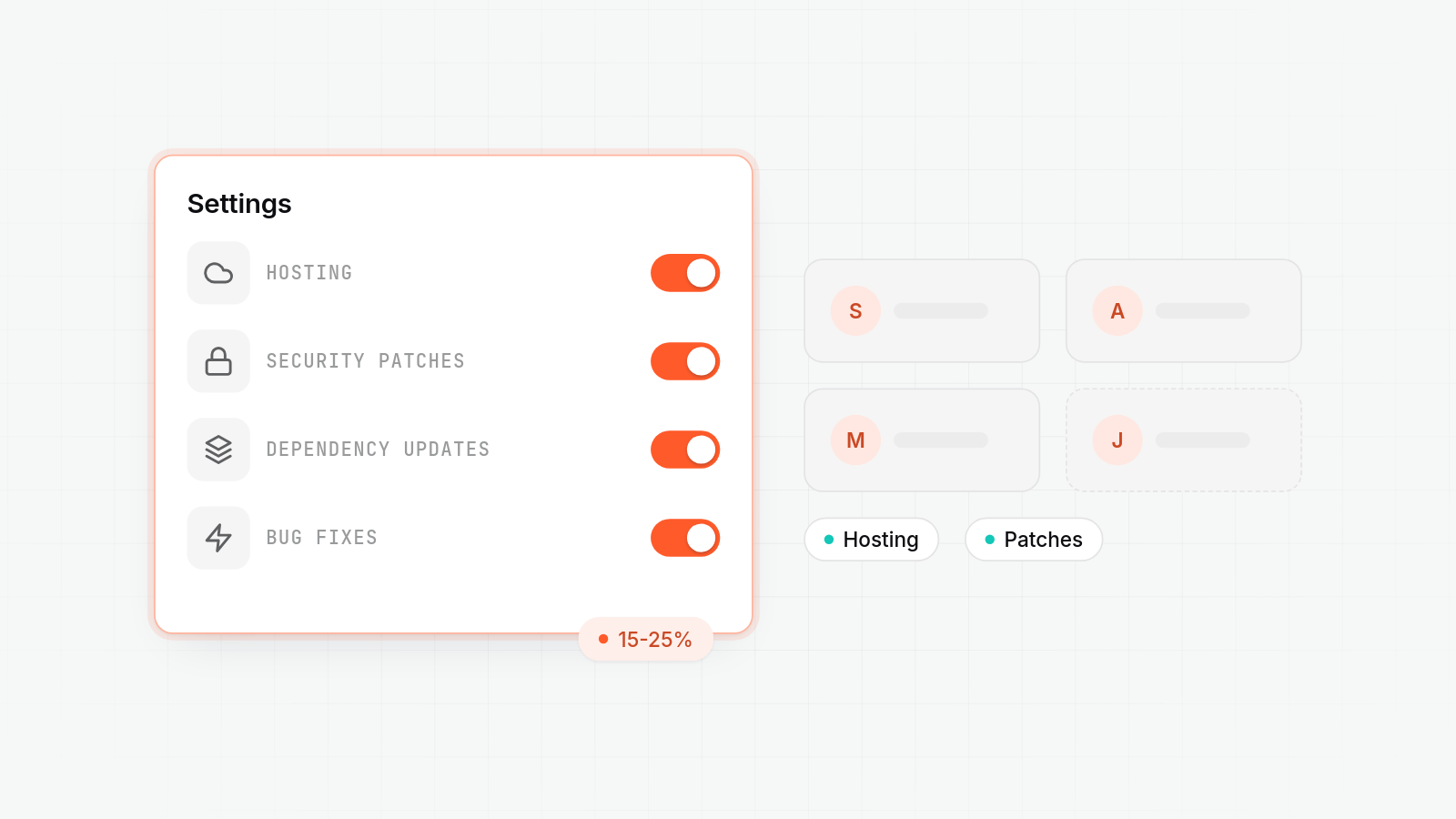
AppBespoke sits in the agency column, with specific limits worth being clear about. It doesn't replace a large in-house engineering function building a product that needs daily, hands-on iteration. It's built for businesses that need software to stay fast and cheap to change as they grow, with a fixed-scope build and a predictable annual maintenance figure, usually 15% to 25% of the original build cost, rather than an open-ended hourly arrangement. For more on what that figure looks like in practice, see annual costs to maintain a custom web application.
When to hire an in-house development team
The right time to hire an in-house development team is once you have enough steady, predictable work to keep a developer fully occupied, month after month, without gaps, because the fixed cost of a salary is matched by a fixed amount of useful work.
Signs that you're ready for an in-house hire:
- Software is central to how your business makes money, not a support function.
- You have a backlog of work that doesn't run dry between projects.
- You can afford the time and cost of a proper hiring process, including the risk of getting it wrong once.
- Someone in the business can manage a developer technically, or you're prepared to learn.
- You're planning to keep building on the same codebase for years, where continuity and deep product knowledge pay off.
Signs you're not ready yet:
- Development work comes in bursts, with quiet periods in between.
- You don't have anyone who can judge technical work or manage a developer day to day.
- You're not sure the product or workflow is stable enough to commit a permanent team to it.
- The last time you tried to hire, it took months and the role sat empty.
Building a proper engineering team, rather than making a single hire and hoping, comes down to volume. One developer rarely makes sense alone, because illness, holiday, or turnover leaves you with nobody. A team of two or three starts to make sense once the workload genuinely needs it. Below that point, the fixed cost of headcount usually outweighs the benefit of having someone permanently on staff.
Outsourcing software development: the decision in practice
The outsourcing software development decision comes down to matching the shape of your work to the shape of the people doing it. Steady, year-round, central-to-the-business work suits a fixed team. Uneven, project-shaped, or occasional work suits a flexible arrangement you can scale up and down.
Most growing businesses, particularly outside pure software companies, don't have enough constant development work to keep a full in-house team efficient. A retailer building an internal stock system, a services firm automating a booking workflow, a logistics company building a reporting tool: these are real projects, but they don't necessarily generate enough ongoing work to justify permanent engineering headcount once the initial build is done.
In that situation, an agency model, particularly one that prices maintenance clearly and writes code meant to be read and changed later, tends to serve the business better than carrying the fixed cost and hiring risk of an in-house team sitting idle between projects. If this is the route for you, it's worth reading how to choose a custom web app development company for a growing business before committing to one. Some businesses land on a hybrid approach, keeping a small internal core for day-to-day decisions and bringing in outside help for builds and peaks, once they're past the earliest stage. That still depends on having enough steady work to justify even a small permanent team.
FAQs
Why would someone choose an agency role instead of an in-house role?
From a business's point of view, it usually comes down to flexibility and risk. An agency can start quickly, scales with the size of the project, and doesn't leave you carrying a fixed salary during quiet periods. It also means you're not solely dependent on one person's availability or judgement, which reduces the risk of losing critical knowledge if someone leaves.
What is a disadvantage of using an in-house development team?
The main disadvantage is cost that doesn't flex with workload. A salaried developer costs the same whether there's a full pipeline of work or a quiet month, and that cost includes recruitment time, management overhead, and benefits on top of salary. The other disadvantage is key person dependency: if one person holds most of the knowledge about how the system works, their departure can stall delivery while you recruit and onboard a replacement.
Is it cheaper to use an in-house team or an agency?
It depends on volume. Per hour, an agency usually costs more than an in-house salary works out to. But in-house cost doesn't stop when the work does, and it includes recruitment, management time, and the risk of a bad hire. This is the heart of the cost of in-house developers vs agency comparison: below a certain volume of steady work, an agency is usually cheaper overall, because you're not paying for idle time. Above that volume, a well-run in-house team usually works out more cost-effective, because the fixed cost is matched by fixed, useful output.
What is the difference between in-house and agency development?
The difference is who employs the people doing the work and how the cost is structured. In-house means hiring developers directly, paying a fixed salary, and managing them as staff. Agency means contracting an external team for a project or a defined scope of ongoing work, usually priced by project or retainer rather than salary. In-house gives more day-to-day control and keeps knowledge inside the business by default. Agency gives more flexibility and avoids the fixed cost of headcount, provided the vendor documents and hands over work properly.
How do I know if my business has enough work to justify hiring in-house?
Look at the last twelve months, not the next twelve. If development requests have come in steadily, without long gaps, and a hire would have been busy throughout, that's a reasonable sign you have enough volume. If the work has come in bursts, with stretches where there wasn't much for a developer to do, an agency model fits better, because you're only paying for the work that's actually there.