Development costs9 min read
Best Custom Web App Development Company for a Growing Business
Best Custom Web App Development Company for a Growing Business: A Checklist
By Duncan
Key takeaways
"Best company" lists are usually built from paid placements and submissions, not independent assessment. Treat them as directories, not recommendations.
The question worth asking is who builds software that stays fast, maintainable, and affordable to run as your business grows.
Four things are worth checking with any vendor: code ownership, what happens after launch, how they plan for future change, and whether they can explain decisions in plain terms.
Use a checklist you can run against any vendor, not a ranking you have to trust blindly.
Cost, team size, and technology stack matter less than whether the company can tell you clearly what happens to your code and your budget a year after launch.
The best custom web app development company for a growing business is the one that can show you, clearly, how it keeps software fast and cheap to change after launch, not the one that ranks highest on a list. Search for "best custom web app development company" and you'll get a list. It won't tell you how it was made. Most of these rankings come from paid placements, directory submissions, or agencies that write their own blurb and send it in. None of that tells you whether a company builds software that stays fast and affordable to run once your business has grown past what it looked like on day one. The question worth asking is which company's process keeps your software cheap to change in year three, and it's worth asking before you even get a quote for building a custom web application.
Why "best company" lists aren't a reliable way to choose
"Best company" lists aren't a reliable way to choose because most are built from paid placements and submissions, not independent testing. Best-of lists for custom software companies are rarely the result of independent testing. Most are built from directory submissions, paid placements, or SEO roundups that get updated whenever a new company pays to be included. A company can appear on one of these lists without anyone checking its code quality, its support record, or what happens to clients after launch.
A roundup needs entries, and entries are easier to collect through submissions and partnerships than through actual project audits. A business searching for "the best custom web app development company for a growing business" is looking for a shortcut past due diligence. These lists don't offer that. They offer a different set of names to research from scratch, and many of those businesses would be better served first working out whether custom software is worth it for them at all.
The more useful approach, and a practical way to learn how to choose a software development company, is to ignore rankings and ask a small number of specific questions of any vendor you're considering, directly, in front of you.
What actually matters when hiring app developers for a growing business
What matters when hiring app developers for a growing business is whether the software stays fast and cheap to change as the company grows, not how the vendor is described on a directory page. That depends on decisions made early in the build, long before most clients think to ask about them.
Who owns the code
Ask, in writing, whether you own the code, the repository, and the infrastructure accounts once the project is delivered. Some vendors keep code in their own accounts and hand over access only on request, or only after a support contract ends. That can leave you stuck if you want to move to another developer later, or if the relationship sours. A straightforward answer is: yes, you own it, here's the repository, here are the credentials. Anything vaguer is worth pressing on before you sign anything.
What happens after launch
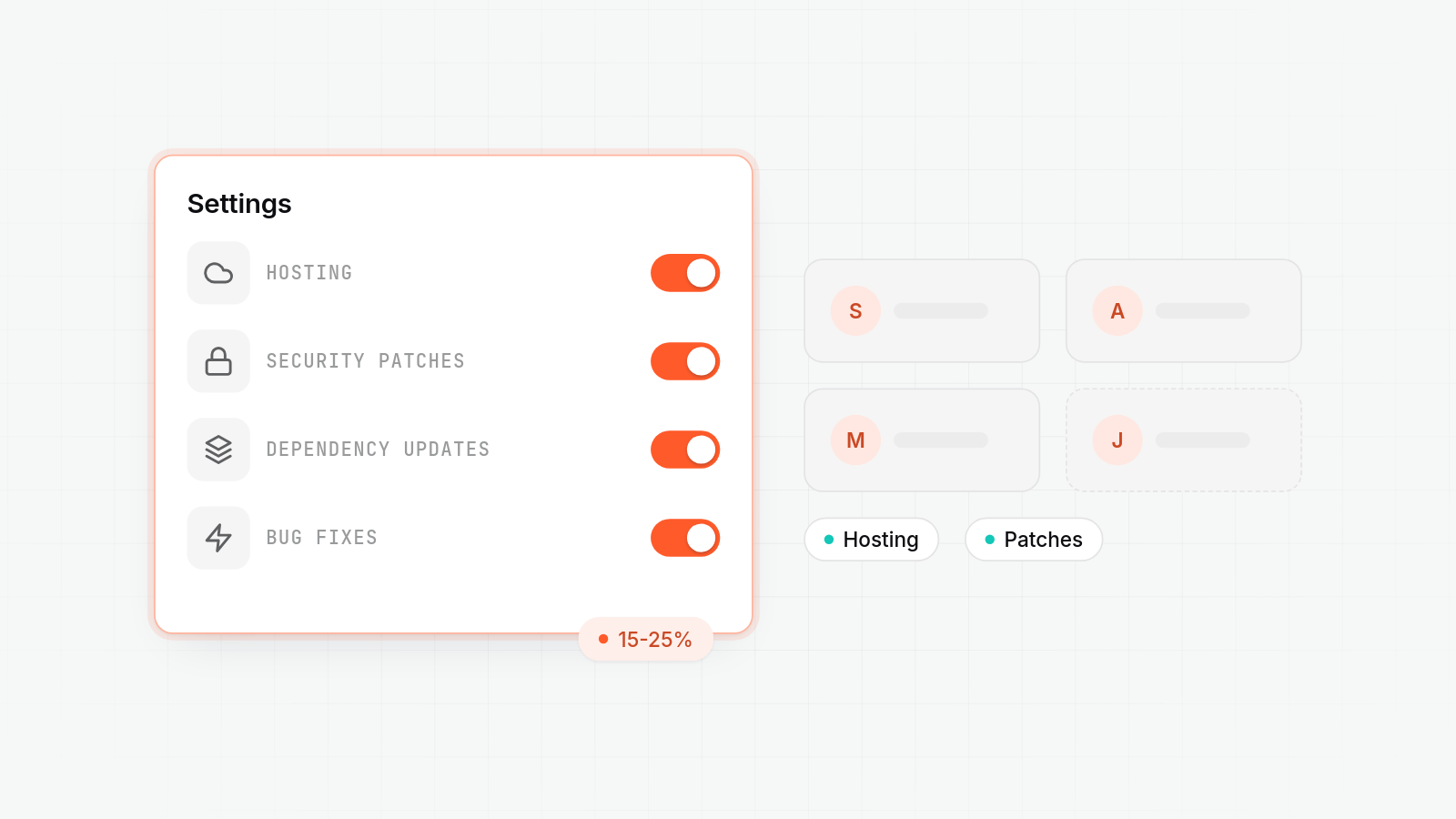
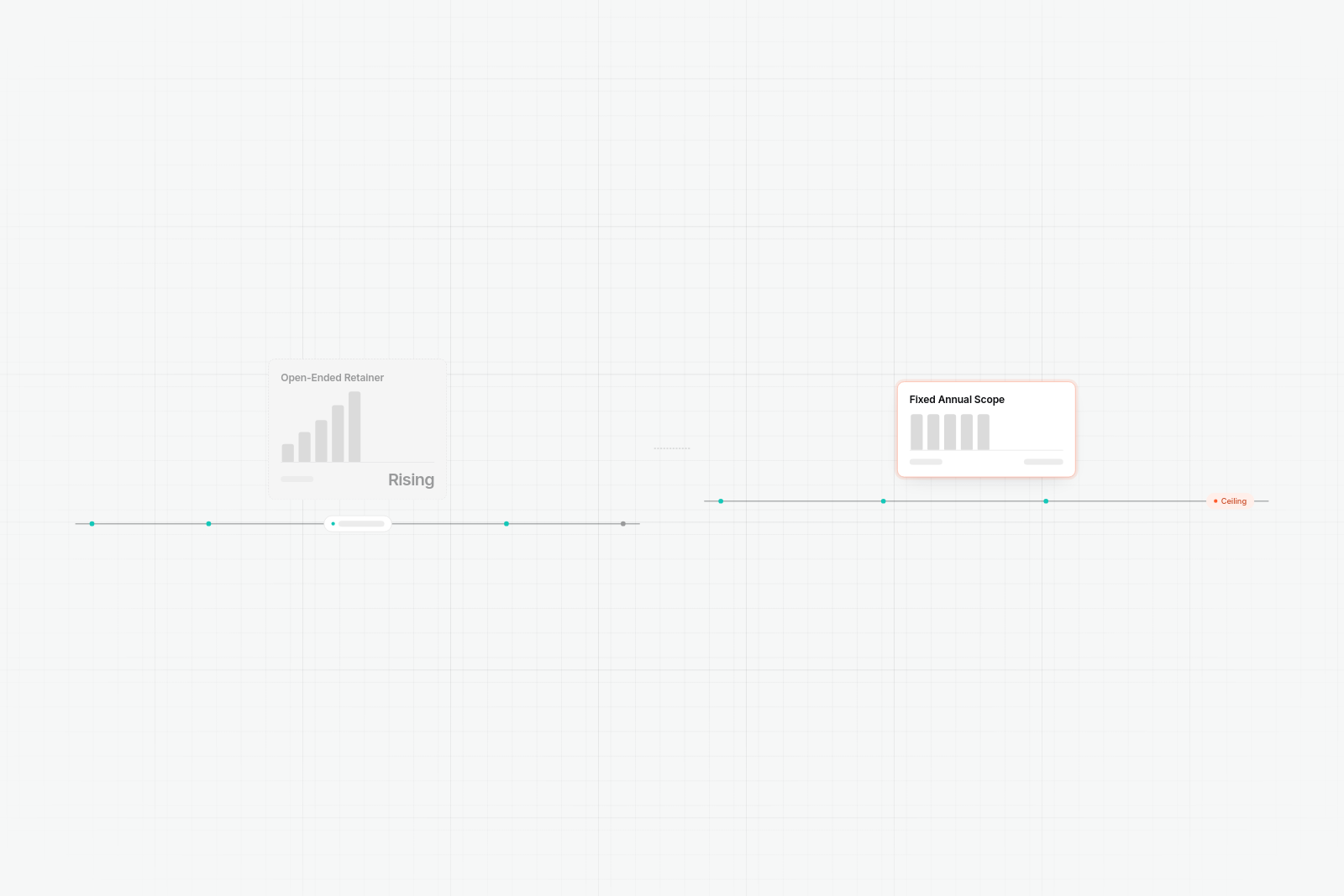
Ask what support looks like once the application is live, and get specifics rather than reassurance. Some agencies offer open-ended retainers with no fixed scope, which can run well past a sensible maintenance budget if nobody's watching the hours. Others disappear after launch and leave you to find someone else for bug fixes and updates. A clear answer covers hosting, security patches, dependency updates, and a defined amount of small feature work each year, usually priced as a percentage of the original build cost. Compare that figure against typical annual costs to maintain a custom web application before accepting it. Press for a number, not a promise.
How they think about future change
Ask how the company designs for changes you haven't asked for yet. Every growing business ends up needing features, integrations, or workflow changes that weren't in the original brief. A vendor that's thought about this will talk about code that's easy to read and test, kept simple enough that a change doesn't require rewriting half the application. A vendor that hasn't will talk mainly about the features in front of them, with no mention of what a change costs six months later.
Whether they can explain decisions in plain terms
Ask them to explain a technical decision without jargon, and see what happens. If a developer can tell you why they chose a particular approach, and what it costs you if that approach turns out wrong, that's a good sign. If every answer comes back wrapped in buzzwords or vague reassurance, notice that before you commit a budget to them.
A practical checklist for evaluating any software vendor
A practical checklist for evaluating any software vendor beats a ranking, because you can apply it to any vendor, including Bespoke, and compare the answers directly. These are useful questions to ask a software agency, and they work as a general approach to how to evaluate a software vendor of any kind. Here's what to ask, and what a reasonable answer sounds like.
- Who owns the code and infrastructure once the project ends? You should, fully, with handover documented.
- What does post-launch support cost, and what's included? Look for a fixed annual figure, usually 15% to 25% of build cost, covering hosting, security, dependency updates, bug fixes, and a set amount of feature work.
- How do they handle a change request six months after launch? Expect a described process, with a rough sense of cost and turnaround, not "we'll figure it out".
- Can they show how they've kept a previous build affordable to run as it grew? Look for a concrete example of a decision that kept maintenance costs down, not a vague claim about "scalability".
- Do they test before shipping changes, or only after? Expect a reasonable amount of testing on the parts that would be expensive to get wrong, done before release.
- Is the quote fixed-scope, or open-ended by the hour with no ceiling? Either is workable, but you should know which one you're agreeing to.
Run this against every vendor you're considering, not just the one you like best on first meeting. A company that answers all six clearly, without hedging, has probably thought about maintainability before you asked. A company that struggles with more than one or two of these questions is telling you something about what happens after the invoice is paid.
How this compares across common ways to hire
How companies answer this checklist varies by the kind of vendor they are, whether that's a large agency, a freelancer, an in-house hire, or a custom software development partner like AppBespoke. Worth knowing the general pattern before you start asking specific companies specific questions.
| Vendor type | Code ownership | Post-launch support | Planning for future change |
|---|---|---|---|
| Large agency | Usually clear, but process-heavy | Often open-ended retainers with no fixed ceiling | Varies by team; depends who's assigned |
| Freelancer | Usually clear, but risk if they're unavailable | Informal, dependent on their schedule | Limited, one person's judgement only |
| In-house hire | Full ownership by default | Built in, but slow to scale up or down | Strong, if the hire has the right experience |
| Directory-listed "best" company | Unknown until you ask directly | Unknown until you ask directly | Unknown until you ask directly |
| AppBespoke | Full ownership handed over, documented | Fixed-scope maintenance, no open-ended retainers, doesn't maintain code it hasn't reviewed | Built around code that's straightforward to read and test, so changes stay affordable later |
This table isn't a ranking either. It shows where the risks usually sit for each type of vendor, so you know which questions to lean on hardest depending on who you're talking to.
FAQs
What are some reputable custom web app development companies in the USA?
There's no single trustworthy list of this, for the same reason covered above: most roundups are built from paid placements or submissions rather than independent review. Rather than relying on a name from a list, apply the checklist in this post (code ownership, post-launch support, planning for change, plain-terms explanations) to any company you're considering, in the USA or elsewhere. That tells you more about fit than a ranking will.
How much is an app with 100,000 users worth?
This depends entirely on what the app does, its revenue model, and the market it operates in, not the user count alone. A free tool with 100,000 users and no monetisation isn't worth the same as a subscription product with the same number of paying users. If you're asking because you're valuing a business or a potential acquisition, that's a different exercise to choosing a developer. Get a proper valuation rather than estimating from user numbers alone.
Who are the best app developers for startups?
There's no reliable single answer here either, for the reasons above. What matters for custom web app developers for startups is a vendor that can build quickly without locking you into assumptions you'll want to change once you've found product-market fit. Ask any startup-focused vendor how they'd approach a build that might pivot significantly within a year, and listen for whether their answer involves keeping the codebase simple rather than over-engineering for scale you don't have yet.
How much would it cost to have someone develop an app?
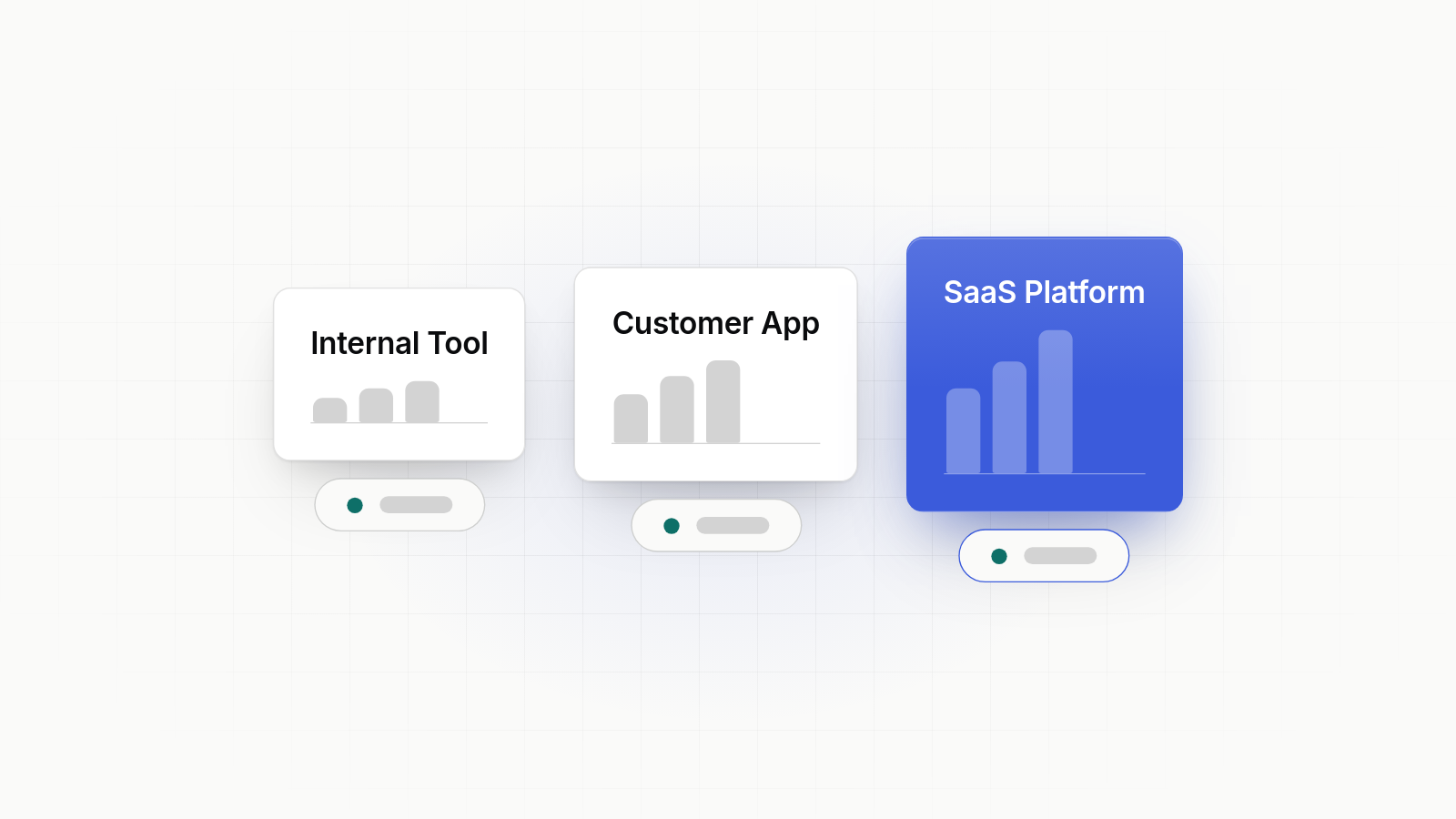
Costs vary widely by project type. A simple internal tool typically runs £10,000 to £30,000. A mid-sized customer-facing app with payments and multiple user roles typically runs £30,000 to £90,000. A multi-role, SaaS-like product with several integrations and admin tooling typically runs £90,000 to £250,000 or more. The main things that move the price within these ranges are integrations, authentication complexity, data model complexity, UI polish, and compliance requirements.
Does AppBespoke offer open-ended retainers?
No. AppBespoke works to fixed-scope quotes for builds and fixed-scope annual maintenance agreements afterwards, rather than open-ended retainers with no ceiling. It also doesn't maintain applications it hasn't reviewed first, so if you're coming from another vendor, expect a review step before any ongoing support begins.