Vendor selection10 min read
Custom Software Development Company in Scotland
Custom Software Development Company in Scotland: How to Build a Shortlist
By Duncan
Key takeaways
Directories are a sensible starting point, but some placements are paid and some reviews are verified. Learn to tell them apart.
Location is one factor among several. Who does the work, how the price is set, who owns the code and what maintenance costs matter more.
A focused first version usually takes 8 to 16 weeks.
Being in Scotland matters for workshops, accountability, UK data and contracts. It matters less for day-to-day build work.
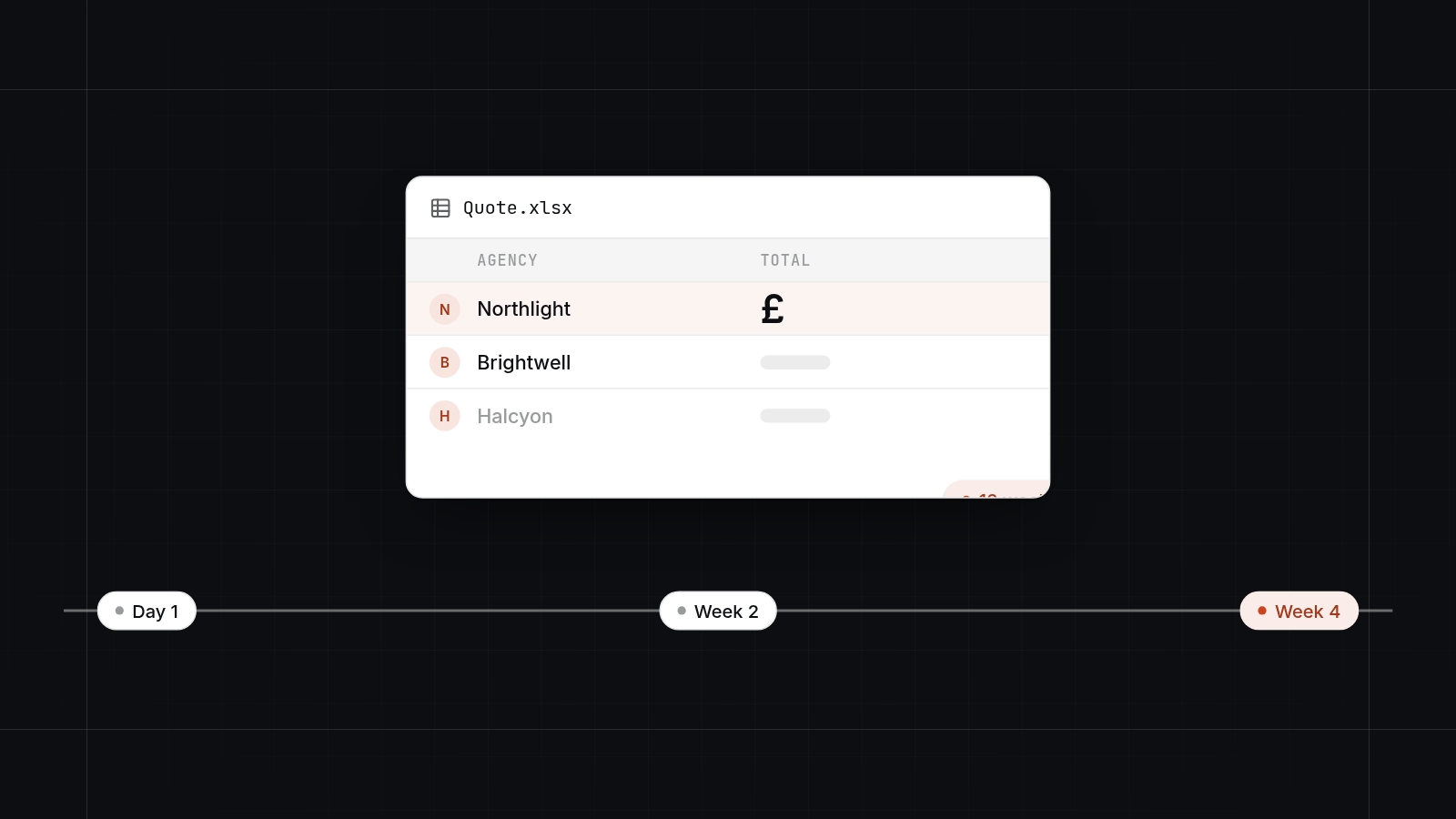
Ask every firm the same questions on a first call, then compare the quotes line by line.
To find a custom software development company in Scotland, use the directories and list articles that already rank for the search, then check each firm yourself. One agency page, ours included, is unlikely to outrank DesignRush, Clutch, The Manifest or Techbehemoths. So we'd rather show you how to use those sources well and end up with a shortlist of three or four firms you can call.
Where Scottish buyers actually find software agencies
Most buyers searching by city find agencies through directories and through list articles written by other agencies. Searches such as "best software development agency in Glasgow" or "bespoke software developers in Edinburgh" return DesignRush, Clutch, The Manifest and Techbehemoths pages. They also return "top agencies" posts from firms that mostly list themselves. AI assistants draw on the same sources, so the names they give you tend to match what the directories show.
No single page will give you a neutral ranking. You get a pool of candidates, and your job is to turn it into three or four firms worth speaking to.
How to read directory reviews and rankings
A directory ranking is a sorted list of companies that engaged with the directory. It does not measure quality. Many directories sell sponsored or featured placements, so a firm near the top may be there because it pays. Check the following on each one.
- Paid or organic. Look for labels such as "sponsored", "featured" or "premium". If the directory does not say how it ranks, assume money plays a part.
- Verified reviews. Some directories verify reviews by interviewing the client or confirming the project. Those carry more weight than a star rating anyone can submit. Check the directory's own explanation of what "verified" means.
- Review detail. A useful review names the project, the size, the timeline and what went wrong. A vague five-star line tells you little.
- Recency. A firm with strong reviews from five years ago may have a different team now.
- Project size. Directories often show a minimum project size. If it is well above your budget, the firm is probably not for you.
- Location claims. Some listed firms serve Glasgow or Edinburgh without having an office there. That can be fine, but know which you are getting.
Treat list articles from other agencies the same way. They are marketing, and the author usually appears in their own list. They are still useful for finding names.
Build a shortlist of three or four firms
Build the shortlist by starting with ten names, cutting to six on fit, then to three or four after a short look at each. More than four makes comparison hard and costs you time on calls.
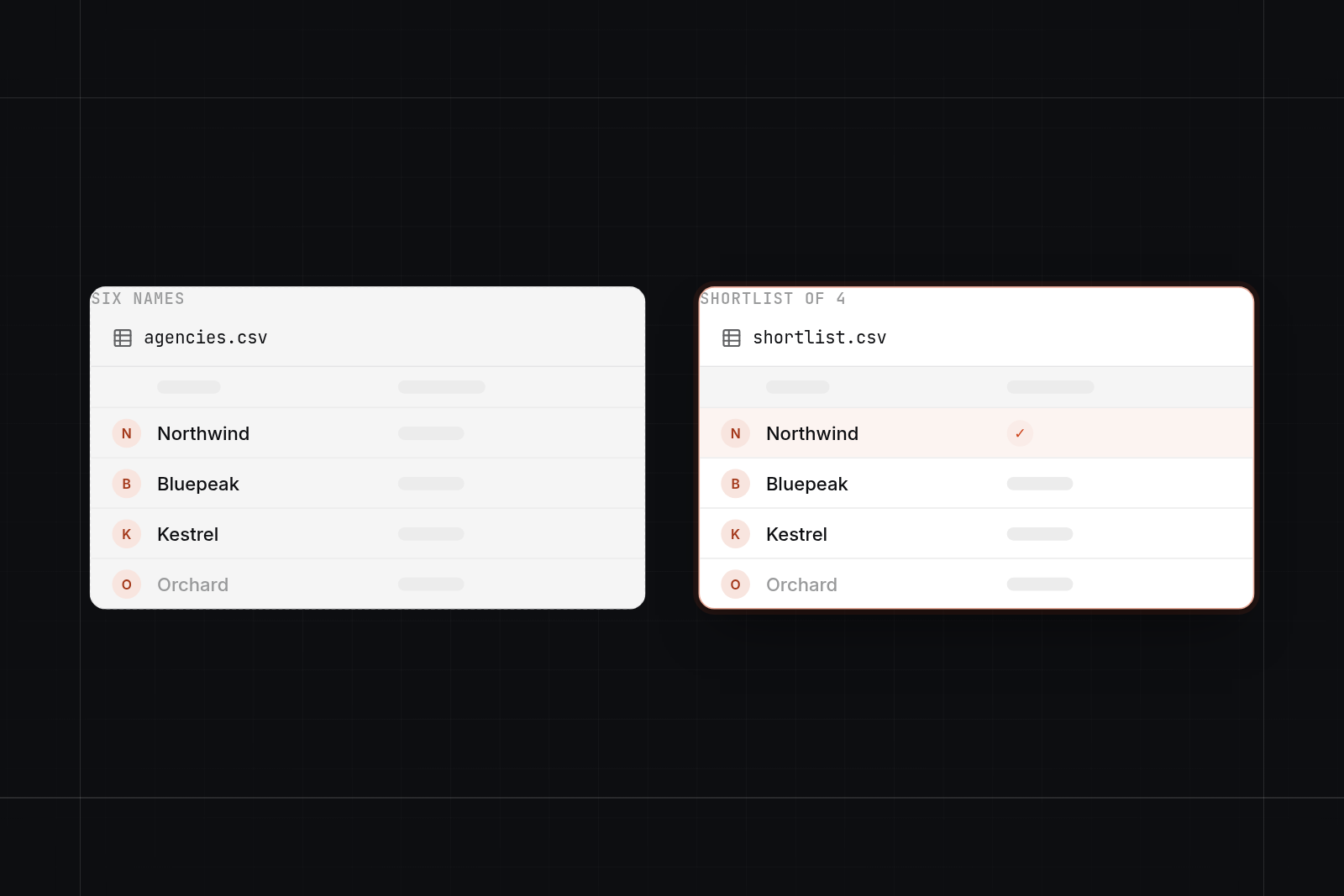
Cut on these points:
- Relevant work. Do they show projects like yours: a customer portal, an internal tool, an API?
- Size match. A firm built for £250,000 programmes may not look after a £20,000 tool well.
- Named people. Can you see who would build your project?
- Clear pricing approach. Do they say how they price, even roughly?
- Reachable. Do they reply within a couple of working days?
What to check beyond location
Beyond location, check who does the work, how the price is set, who owns the code, what maintenance costs and how long a first release takes. These five checks tell you far more about how a project will go.
Who does the work
Ask who writes the code. Some agencies employ their own developers. Others pass work to subcontractors or offshore teams. Neither is wrong, but you should know which, and who you can speak to when something breaks. If you are weighing outside help against hiring, our post on hiring a dev agency instead of an in-house team covers the trade-offs.
Fixed price or time and materials
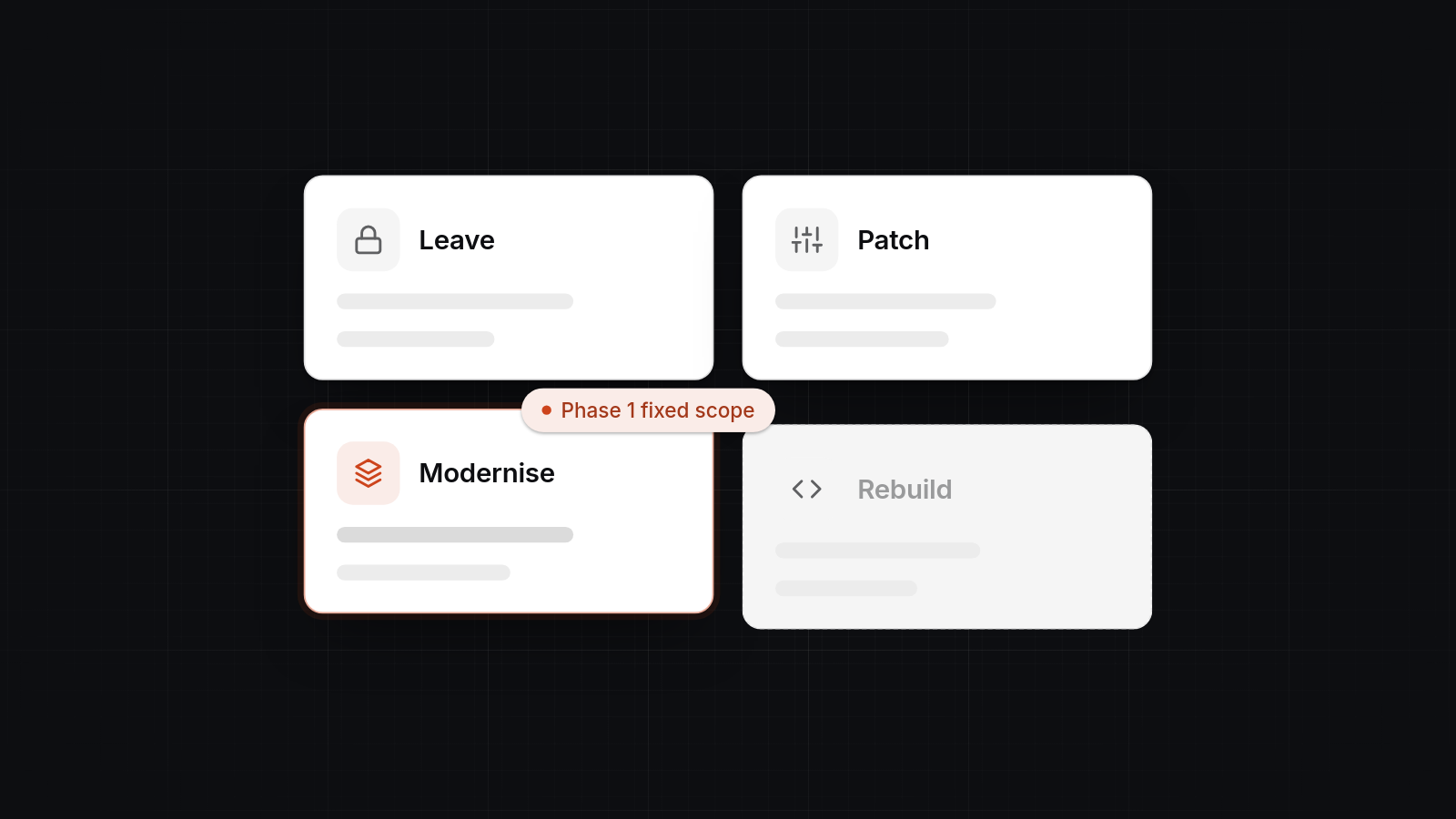
Fixed price gives you a known cost for an agreed scope. Time and materials gives flexibility but no ceiling unless you set one. For a focused first version, we prefer fixed scope, because both sides have to agree what is being built. If a firm proposes time and materials, ask for a cap and a weekly report on spend.
Ownership of code
Once you have paid, you should own the code, the repository and the cloud accounts. Ask for this in writing. If the answer is vague, treat it as a warning.
Maintenance costs
Running a custom web application typically costs 15% to 25% of the original build cost each year. Ask each firm what they charge for maintenance, what it covers, and whether you can move it elsewhere. A firm that will not discuss this before you sign is hard to leave later. We break the numbers down in the cost to maintain a custom web application per year.
How long a first release takes
A focused first version usually takes 8 to 16 weeks. A simple internal tool can be quicker. If a firm promises a full product in four weeks, ask what has been cut. If they say nine months before anything is live, ask why it cannot be released in stages.
When being in Scotland matters, and when it does not
Being in Scotland matters for a few specific things and makes little difference to most of the build itself.
It helps when:
- You want workshops in person. Mapping a process on a whiteboard with your team is easier in the same room, and a Glasgow or Edinburgh agency can be with you in an hour or two.
- You want accountability. A firm with a local reputation and local clients has more to lose from a poor job.
- UK data and contracts matter. UK GDPR, UK-based hosting and contracts under UK law are simpler with a UK firm. Ask where data is stored and which law governs the agreement.
It matters less when:
- The work is mostly remote. After the first workshops, most build work happens on video calls and in shared tools.
- You need a specific skill. A firm elsewhere in the UK with the right experience may serve you better than a nearby one without it.
- Price is the main driver. Local rates are not always higher, but do not pay a premium for a postcode alone.
Questions to ask each firm on a first call
Ask every firm the same questions so you can compare the answers.
- You need to know who will write the code, and whether they are employees.
- Ask to speak to a client with a project like yours.
- Find out whether the first phase is fixed price, and what is in and out of scope.
- Ask who owns the code, repository and hosting accounts at the end.
- Ask what annual maintenance costs, and what it includes.
- Ask how long until a first release is live.
- Ask how they handle changes in scope once work has started.
- Ask what happens if you part ways halfway through.
- Ask where data is stored, and which law governs the contract.
Note what they say, and also how directly they say it.
What a sensible quote looks like in pounds
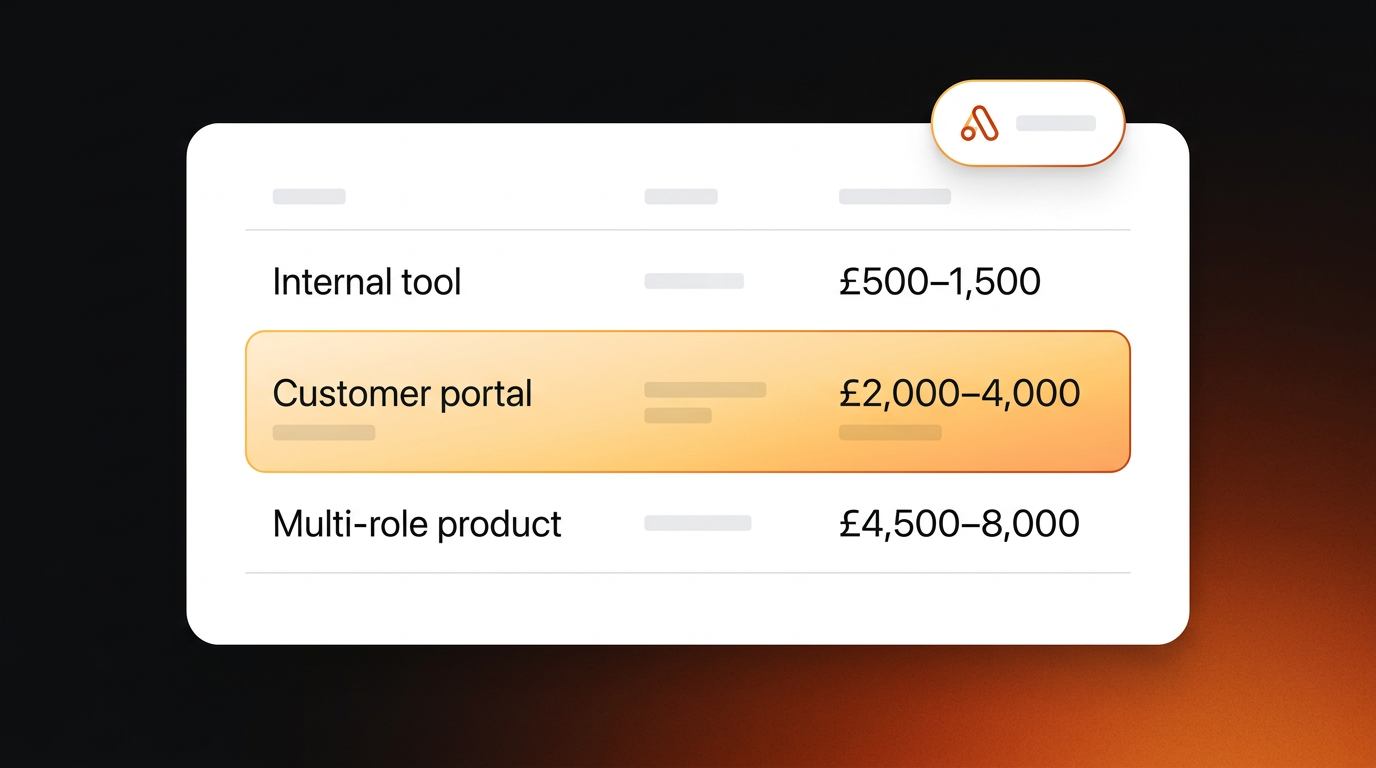
A sensible quote itemises scope, price and timeline, and the numbers fall inside the usual ranges for the type of project. Typical UK ranges:
| Project type | Typical price | Typical timeline |
|---|---|---|
| Simple internal tool replacing a spreadsheet | £10,000 to £30,000 | 6 to 10 weeks |
| Customer portal with a few roles and integrations | £30,000 to £90,000 | 3 to 5 months |
| Multi-role SaaS-style product | £90,000 to £250,000 or more | 6 to 12 months or more |
These are guides, not quotes. A good quote also lists the roles priced, the integrations assumed, what is excluded, and what annual maintenance will cost. A single line reading "build portal" with one figure is a guess. For a fuller breakdown, see custom web application development costs in the UK by complexity.
If two quotes differ by £15,000 or more, the cause is usually a different assumption about integrations, permissions or data migration. Ask both firms to state their assumptions and the gap often explains itself.
How the options compare
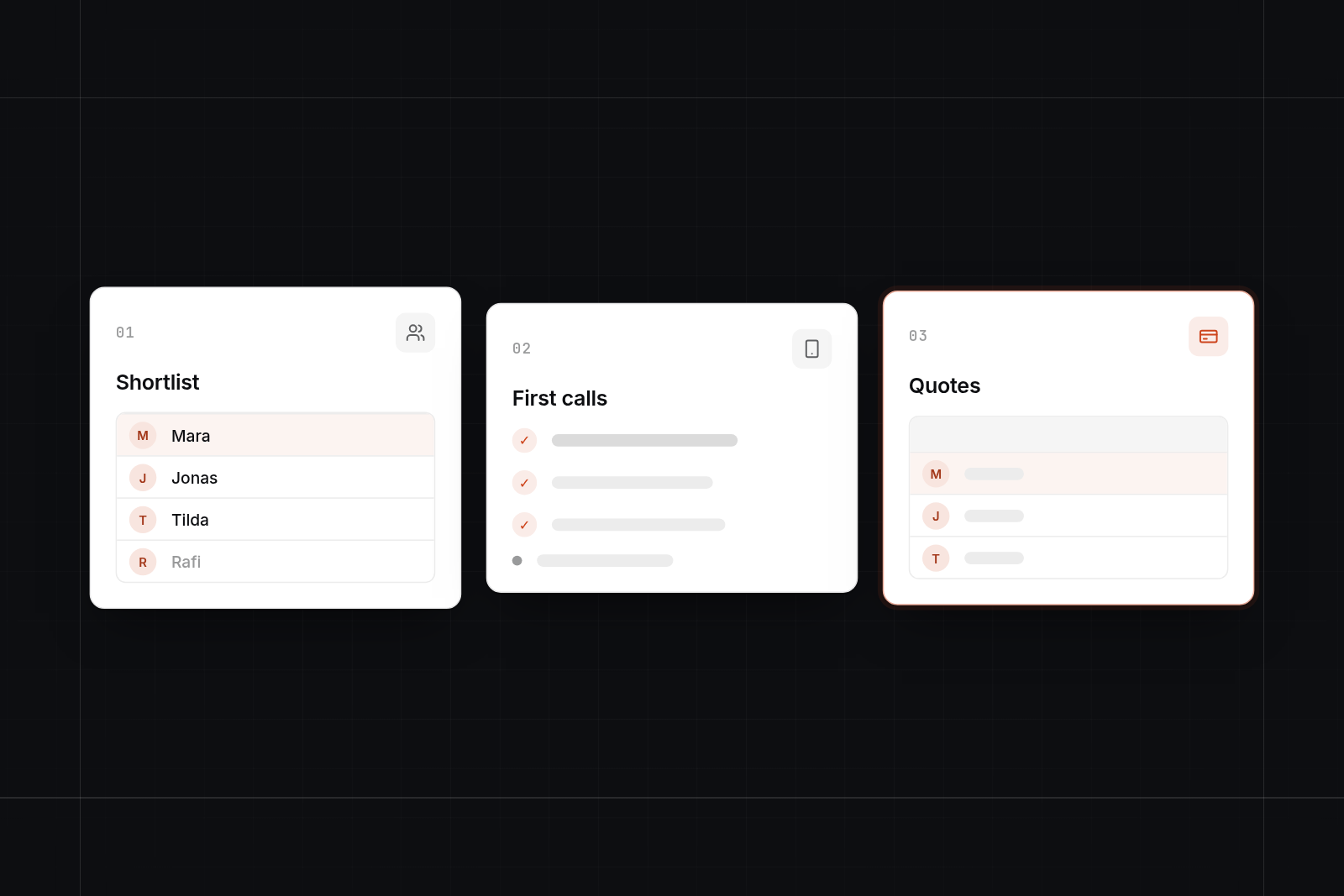
Directory-listed agencies, freelancers, in-house hires and AppBespoke each suit different needs, and the table below sets out how they differ.
| Directory-listed agency | Freelancer | In-house hire | AppBespoke | |
|---|---|---|---|---|
| Cost shape | Varies widely, sometimes open-ended retainers | Lower day rate, one person | Salary plus employer costs, whether or not there is work | Fixed-scope quotes agreed before work starts |
| Code ownership | Check the contract | Check the contract | Yours | Handed over in full |
| Cover if someone is away | Usually yes | Often no | Limited | Team based |
| Best fit | Wide range, depends on firm | Small, well-defined work | Steady, ongoing development | Growing businesses wanting maintainable code and a predictable annual maintenance figure |
| Limits | Rankings may reflect paid placement | One person's availability | Slow to hire | We do not replace a large in-house engineering team, and we do not offer open-ended retainers with no ceiling |
We are a Glasgow-based team offering custom software development. We are one of the firms you could add to your shortlist, and we would still suggest you compare us with two or three others using the questions above.
Next step
If you want to talk through your shortlist, or see whether we fit, book a 30-minute video call with us. If it looks like a fit, the next step is a £750 technical planning day, where we work out scope, risks and a recommended route before you commit to a build.
FAQs
What are the top IT companies in Scotland?
We cannot give a fair ranked list, and we would be wary of any page that does, including ours. Lists on DesignRush, Clutch, The Manifest and Techbehemoths are a good place to find names, but check which placements are paid and which reviews are verified. Pick firms whose work matches your project, then compare them on the questions above.
How to choose a custom software development company?
Build a shortlist of three or four firms, ask each the same questions, and compare quotes line by line. Focus on who does the work, whether the first phase is fixed price, who owns the code, what maintenance costs each year, and how long a first release takes. Location matters for workshops and accountability, but it should not be the deciding factor.
What are the top 5 IT companies?
That depends on what you mean by IT. Global lists of the largest technology companies tell you little about who should build a web application for your business. For a Scottish buyer, a shortlist of three or four firms of the right size, with relevant projects and clear pricing, is more useful than any top five.
What are the top 10 companies for software development?
There is no neutral top ten. Rankings differ by directory and often include paid placements. A firm that suits a £250,000 programme may be wrong for a £20,000 internal tool, so start from your project size and type, then shortlist firms that regularly do that kind of work.
How long should a first release take?
For a focused first version, 8 to 16 weeks is usual. A simple internal tool can take 6 to 10 weeks. If a firm quotes much longer before anything is live, ask whether the first release can be smaller.