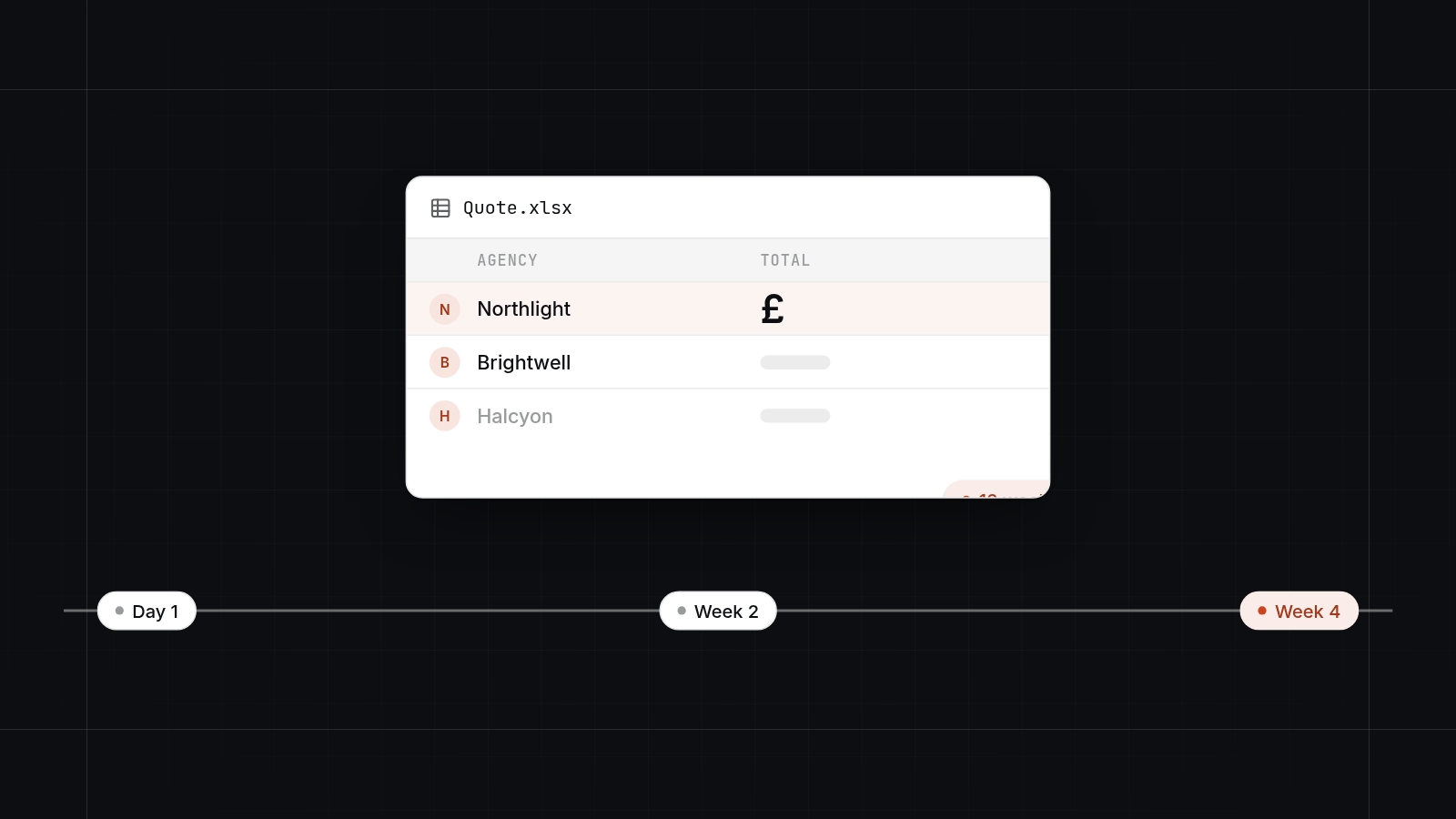
Key takeaways
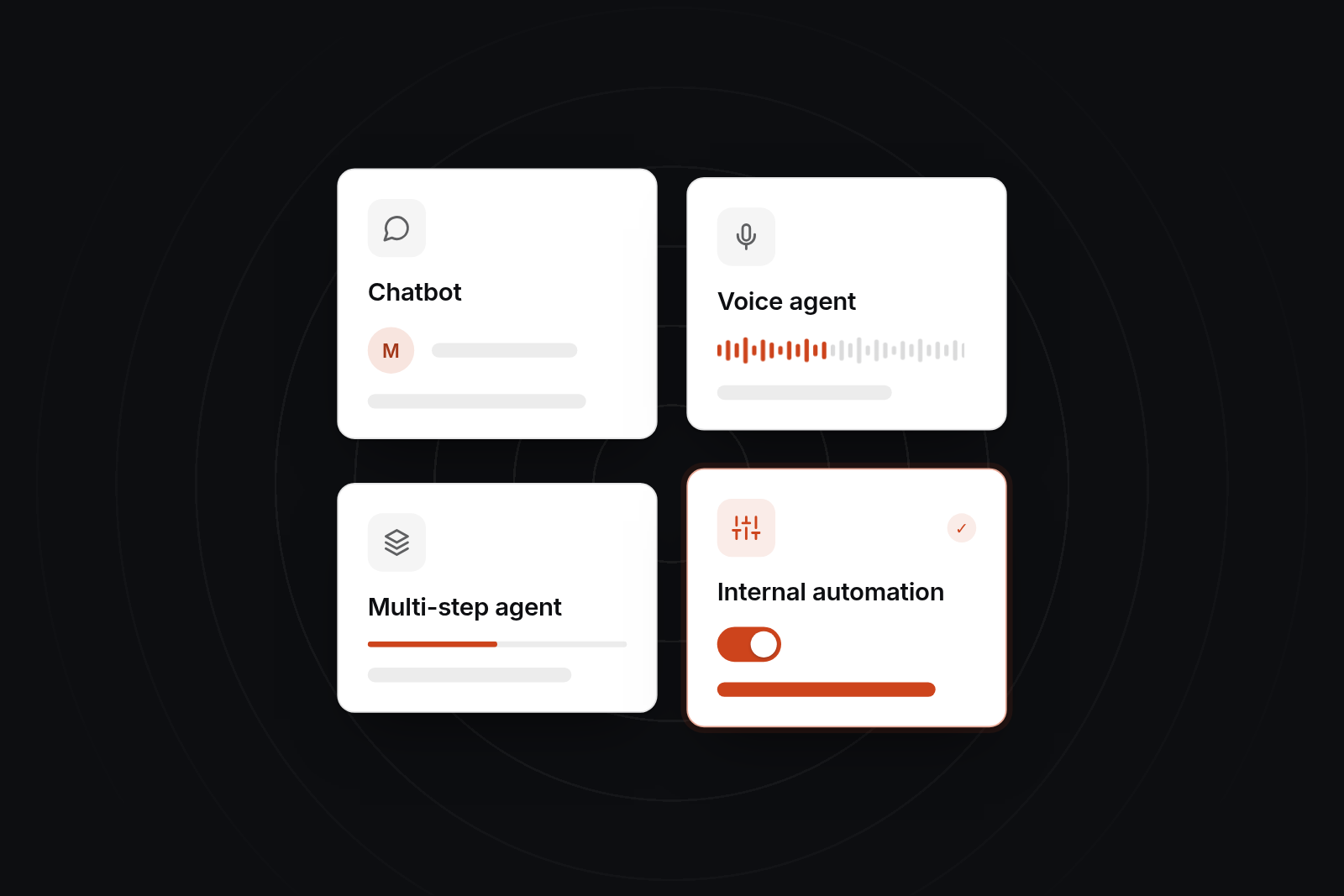
Four kinds of AI tool cover most small business needs: chatbots, voice agents, multi-step agents and internal automation.
Example fixed prices run from about £3,000 for a simple internal automation to £30,000 or more for a multi-step agent connected to several systems.
An AI tool needs running after launch: answer checks, cost monitoring, error handling and updates.
Where the team is based matters for workshops, UK data and contracts. It matters less for the build itself.
Ask for fixed scope, ownership of code and accounts, and a written running cost before you sign.
To build an AI tool for your business in Scotland, you can hire a software agency, an AI consultancy, a freelancer or an automation specialist. Which one suits depends on what the tool has to do and how much it connects to your other systems. We are a Glasgow-based team. This post covers what AI tools can do today, what they cost, who builds them and how to judge a quote.
What an AI tool can realistically do today
An AI tool can answer questions, take calls, carry out routine multi-step tasks and remove manual work, provided the job is clear and the source information is sound. It does well when the task is repetitive and the rules can be written down. It does badly when the task needs judgement, accountability or perfect accuracy.
A customer or staff chatbot
A chatbot answers questions from your own material: policies, product details, process documents and past answers. A staff version helps people find internal information quickly. A customer version handles common enquiries and passes the rest to a person. If you want AI chatbot development in Scotland, the range below is a fair starting point.
Example fixed price: £4,000 to £12,000. Typical timeline: 3 to 6 weeks. The range depends on how much material it draws on, whether it connects to a CRM or help desk, and how it hands over to a human.
A voice agent that answers calls
A voice agent picks up the phone, asks the right questions, books appointments or takes messages, and sends the details to your systems. It suits businesses that miss calls while staff are on site or busy.
Example fixed price: £8,000 to £20,000. Typical timeline: 4 to 8 weeks. Voice is harder than text. Accents, background noise and callers who change their mind all need testing before it goes live.
Agents that carry out multi-step tasks
An agent works through a sequence: read an incoming enquiry, check stock, draft a quote, update the CRM and flag anything unusual for review. It can use several systems in one run.
Example fixed price: £15,000 to £40,000. Typical timeline: 8 to 14 weeks. Each added system and each decision it makes adds testing, so scope matters more here than anywhere else.
Internal automation that removes manual work
This is often the best first project. It covers tasks such as sorting incoming email, pulling figures from documents into a spreadsheet or system, and producing weekly summaries. For a broader look at replacing spreadsheet work, see our AI development service.
Example fixed price: £3,000 to £10,000. Typical timeline: 2 to 5 weeks.
These are examples to help you budget, not quotes. Your own scope can sit outside them.
Where AI is a poor fit
AI is a poor fit when the answer must be right every time, when the process is not yet defined or when a simpler tool would do the job. It produces plausible output, and sometimes that output is wrong.
- Legal, medical or financial advice given directly to customers. A person should stay in the loop.
- Messy or missing source data. The tool can only be as good as the material it reads.
- Processes nobody has written down. If your team cannot explain the steps, a tool cannot follow them.
- Very low volume. If a task happens ten times a month, a checklist is cheaper than a build.
- Fixed rules. If the logic is a simple "if this, then that", ordinary software or a spreadsheet formula is cheaper and more predictable.
We will say so if a conventional tool suits you better. A good supplier does the same.
Who builds an AI tool, and where they are based
Software agencies, AI consultancies, automation specialists and freelancers all build AI tools, and many are based in Glasgow, Edinburgh and elsewhere in Scotland. Each type suits a different job. The table compares them, with us included.
| Option | Suits | Watch for |
|---|---|---|
| Software agency | Tools connected to your systems, with proper testing and handover | Check that they have built AI work before, not only websites |
| AI consultancy | Strategy, readiness checks, training for your team | Some advise more than they build, so ask who writes the code |
| Automation or no-code specialist | Quick internal automations on standard platforms | Can strain with complex data or high volumes |
| Freelancer | Small, well-defined jobs | No cover if they are ill or busy |
| AppBespoke | Custom web apps, APIs and AI tools with fixed-scope quotes and full code ownership handed over | We do not do AI research, train models from scratch or run large enterprise programmes |
We are an AI development company in Scotland that builds AI tools alongside the web applications, APIs and internal tools they usually connect to, and we take over existing codebases when an AI tool has to sit inside one. If you are comparing suppliers more broadly, our guide to shortlisting a custom software development company in Scotland covers the process, and hiring a dev agency instead of an in-house team covers the trade-offs. For the wider custom software development we do, see the service page.
Where the team is based matters for some things
Location matters for a few things. Workshops go better in the same room, and a Scottish team can be with you in an hour or two. UK GDPR, UK hosting and contracts under UK law are simpler with a UK firm. Day-to-day build work happens on video calls and in shared tools, so location matters less once the project is under way. A team elsewhere with the right experience can beat a nearby one without it.
How an AI tool is run and monitored after launch
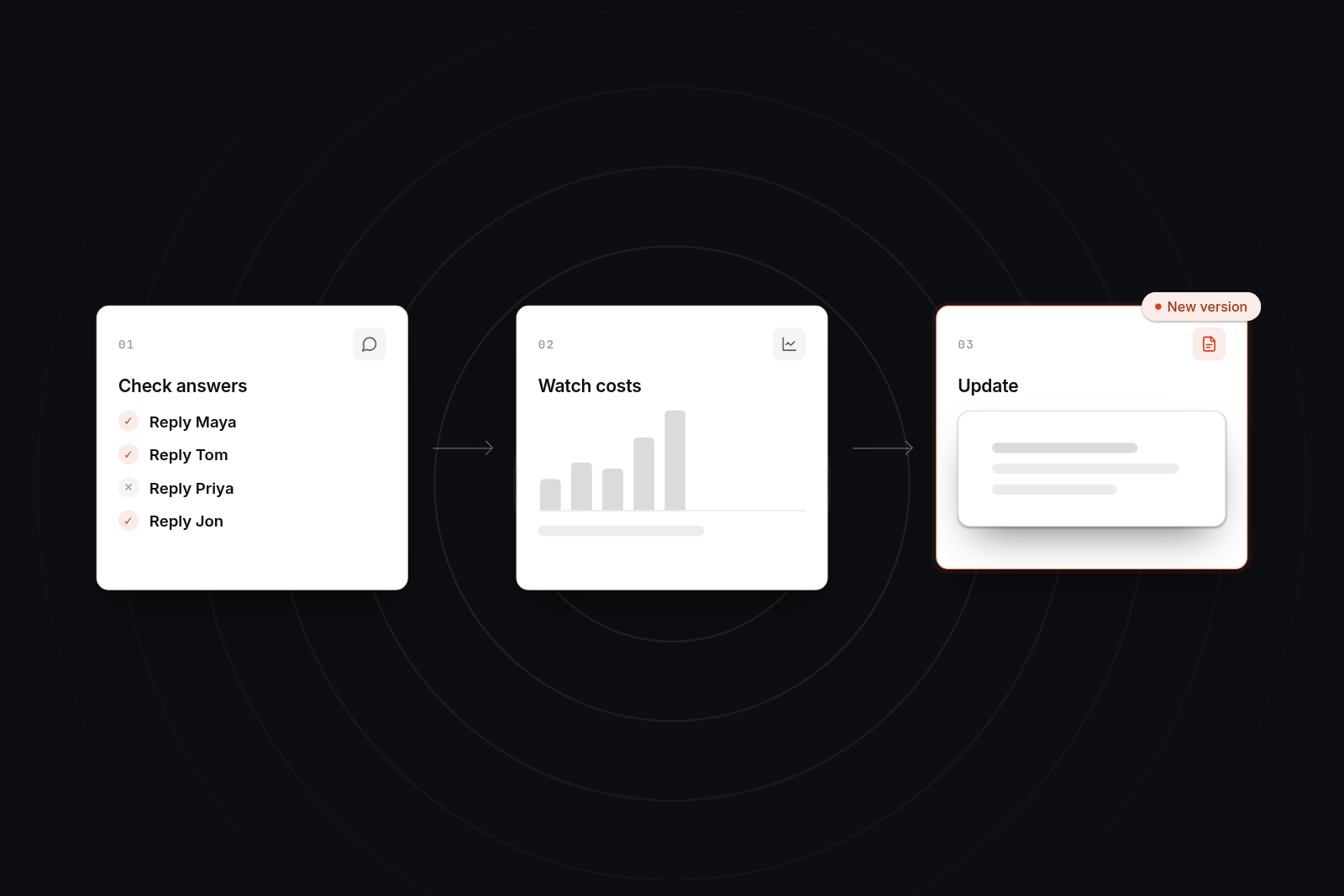
An AI tool needs regular checking after launch, because its answers, its costs and the business around it all change. A tool that is built and left alone gets worse. Four jobs cover the ongoing work.
Checking answer quality
Someone reviews a sample of real answers each week at first, then each month. They look for wrong answers, out-of-date information and replies that sound confident but are not supported by your material. A set of test questions with known good answers is run again after every change, so you can see whether quality moved.
Watching running costs
Most AI tools pay for each use, so cost rises with volume. Set a monthly budget, track spend by day and agree an alert level. A looping task or a sudden rise in traffic can multiply the bill quickly if nobody is watching.
Handling errors
External services go down, calls fail and inputs arrive in odd formats. The tool should retry sensibly, fail safely and tell a person when it cannot finish a task. Logs should show what happened, so a fault can be traced rather than guessed at.
Updating it as the business changes
Prices, policies, products and staff change. The tool's source material has to change with them, and the model it uses will be updated or replaced by its provider from time to time. Each of these is a small piece of planned work.
We suggest budgeting 15% to 25% of the build cost each year for running and maintaining a custom application. AI tools also carry usage costs, so ask for a monthly estimate of those separately.
What to ask for in a quote
A good quote lists scope, price, timeline and running costs in writing, and names who does the work. If you are not technical, this checklist covers what matters.
- The exact task. What the tool will do, and what it will not do.
- A fixed price for the first phase. Ask for what is in and out of scope.
- A timeline. Dates for a first working version, not only a final delivery.
- Ownership. You should own the code, prompts, repository and cloud accounts.
- Running costs. A monthly estimate for usage, hosting and support.
- How quality is checked. Who reviews answers, how often, and against what tests.
- Human handover. What happens when the tool is unsure.
- Data handling. Where data is stored, which law governs the contract and whether your data is used to train anyone's model.
- Who writes the code. Employees, subcontractors or both.
- Exit terms. What happens if you part ways halfway through.
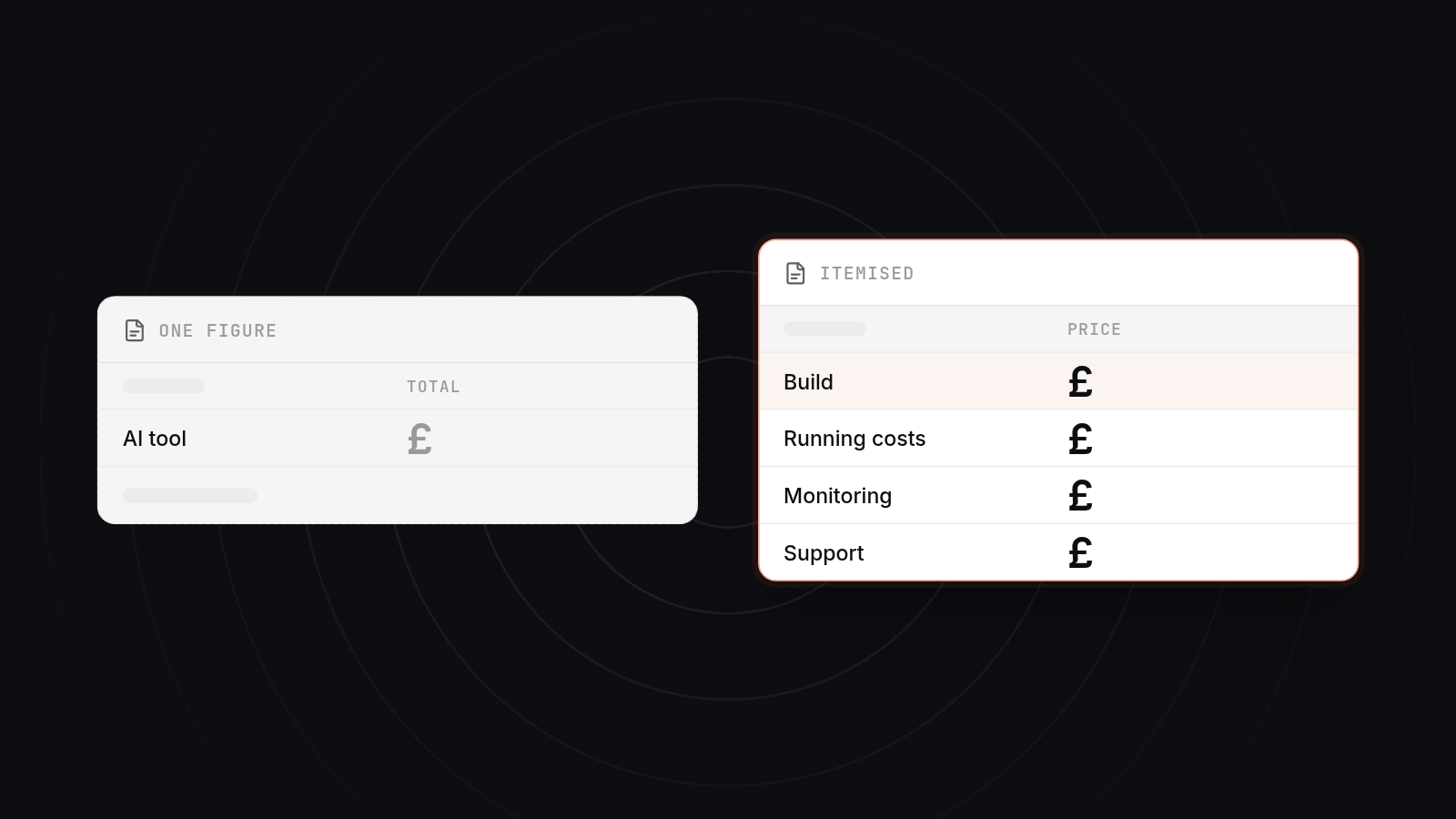
Treat a single line reading "build AI tool" with one figure as a guess. If two quotes differ by thousands of pounds, look at what each one assumed about integrations and testing.
Next step
If you are weighing up an AI tool and want a straight view of what is realistic, book a 30-minute video call with us. If it is a fit, the next step is our £750 technical planning day, where we work out the scope, risks and a fixed price with you.
FAQ
FAQs
Who can build an AI tool for my business in Scotland?
Software agencies, AI consultancies, automation specialists and freelancers all build them. For a tool that connects to your systems, a software agency with AI experience usually suits best. For a small internal automation, a specialist or freelancer can be enough. Check who writes the code, whether the price is fixed, and who owns the result.
How much does an AI tool cost in the UK?
Example fixed prices are about £3,000 to £10,000 for internal automation, £4,000 to £12,000 for a chatbot, £8,000 to £20,000 for a voice agent and £15,000 to £40,000 for a multi-step agent. Running costs come on top, including usage fees, hosting and maintenance.
What are some leading AI companies in Scotland?
Scotland has many AI firms, from research-led product companies to consultancies and agencies. Rather than rely on a ranking, build a shortlist of three or four firms, ask each the same questions and compare quotes line by line. Directory placements can be paid, so check reviews for detail and recency.
Do I need my data in perfect order first?
No, but the tool works from the material you give it. Messy or out-of-date documents lead to poor answers. Sorting the source material is often part of the first phase, and a good supplier will tell you early how much work it needs.