Key takeaways
Look in the App Store and Shopify Flow first. If an app covers most of what you need for a monthly fee, use it.
A custom Shopify app is worth paying for when it links Shopify to your ERP, warehouse or accounting system, or runs a pricing, delivery or trade rule no app handles.
As a guide, a focused custom app costs £3,000 to £15,000 and takes three to eight weeks. Budget for upkeep every year as well.
Shopify releases a new API version every quarter and supports each one for at least 12 months, so every custom app needs a planned upgrade at least once a year.
Whoever builds it, you should own the code, the app in your Shopify account and any hosting accounts.
Use an App Store app, Shopify Flow or a theme change when one of them does the job, because they cost less to start and Shopify or the app's developer keeps them working. Build a custom Shopify app only when the work is specific to how your business trades, when Shopify has to exchange data with your own systems, or when you are paying for several apps to fake one workflow.
We are a Glasgow-based team that builds custom Shopify apps and integrations for UK retailers. This post is for store owners and ecommerce managers with a gap in their store. It compares five ways to fill it: an App Store app, Shopify Flow or other automation, theme changes, a custom app from a UK freelancer and a custom app from an agency. For each we give cost, timeline and upkeep as Shopify changes its API. It ends with a checklist for vetting a UK Shopify developer and the cases where we are the wrong choice.
Five ways to fill a gap in your Shopify store
There are five realistic routes: install an App Store app, automate it with Shopify Flow or a similar tool, change the theme, or have a custom app built by a freelancer or an agency. They differ most in who maintains the result when Shopify changes.
The figures below are a guide based on public pricing and our own projects, not quotes. Your project may cost more or less.
| Route | Typical cost | Timeline | Upkeep as Shopify changes | Watch for |
|---|---|---|---|---|
| App Store app | Free to tens of pounds a month for most apps. Specialist apps cost more | Same day to a week to set up | The app's developer handles API upgrades | Monthly fees add up across apps. Each app can slow the store. You depend on the developer keeping it alive |
| Shopify Flow or other automation | Flow is free on Basic, Grow, Advanced and Plus. Other automation tools charge a monthly fee | Hours to a few days per workflow | Shopify maintains Flow. You maintain your workflows | Not on the Starter plan. The Send HTTP request action needs Grow or higher. Logic gets hard to follow as workflows grow |
| Theme changes | A few hundred pounds for small edits. £1,500 to £5,000 for larger customisation | Days to three weeks | Theme updates can overwrite edits that were made in the wrong place | Only changes what shoppers see. It cannot run back-office logic or sync data |
| Custom app from a UK freelancer | Roughly £2,000 to £8,000 for a focused app | Two to six weeks | Upgrades depend on that one person being available | No cover if they are ill or busy. Check who owns the code and the app |
| Custom app from an agency | Roughly £5,000 to £25,000, more with several integrations | Four to twelve weeks | Usually offered as a support plan or a retainer | Higher cost. Account managers between you and the developers. Retainers with no ceiling |
| AppBespoke | As a guide, £3,000 to £15,000 for a focused custom app or integration. Priced by scope after a £750 planning day | Three to eight weeks | Quoted separately, with the API upgrade dates written into the plan | We do not design themes, and we are not the cheapest option for a job an App Store app already does |
App Store apps
An App Store app is the right answer for most common jobs: reviews, subscriptions, bundles, product options, loyalty, shipping labels. Someone else builds, hosts and upgrades it, and you pay a monthly fee. If two or more established apps already solve the problem, try one before paying for anything custom.
Watch the total. Three or four overlapping apps at £20 to £100 a month each can come to more than a custom build over two or three years, and each app adds scripts that can slow your storefront.
Shopify Flow and other automation
Shopify Flow handles "when this happens, do that" jobs inside Shopify: tag high-value customers, hide out-of-stock products, alert someone when a fraud risk is high, add an order to a spreadsheet. Shopify lists it as a free app on the Basic, Grow, Advanced and Plus plans. It is not available on Starter, and a few actions are limited to higher plans.
If you need a rule based on Shopify's own data, use Flow. It is not enough when you need a screen your staff work in, data from a system Flow cannot reach, or logic so long nobody can follow it.
Theme changes
A theme change is the right route when the gap is on the storefront: a section, a product page layout, a size guide, a delivery message. It needs no app and no extra monthly fee. It cannot keep stock in sync or apply trade pricing, because the theme only controls what shoppers see. Ask for edits that survive a theme update.
When a custom Shopify app is worth building
A custom Shopify app is worth building when the job is specific to your business and no app covers most of it, or when Shopify needs to exchange data reliably with other systems you run. These are the cases we see most:
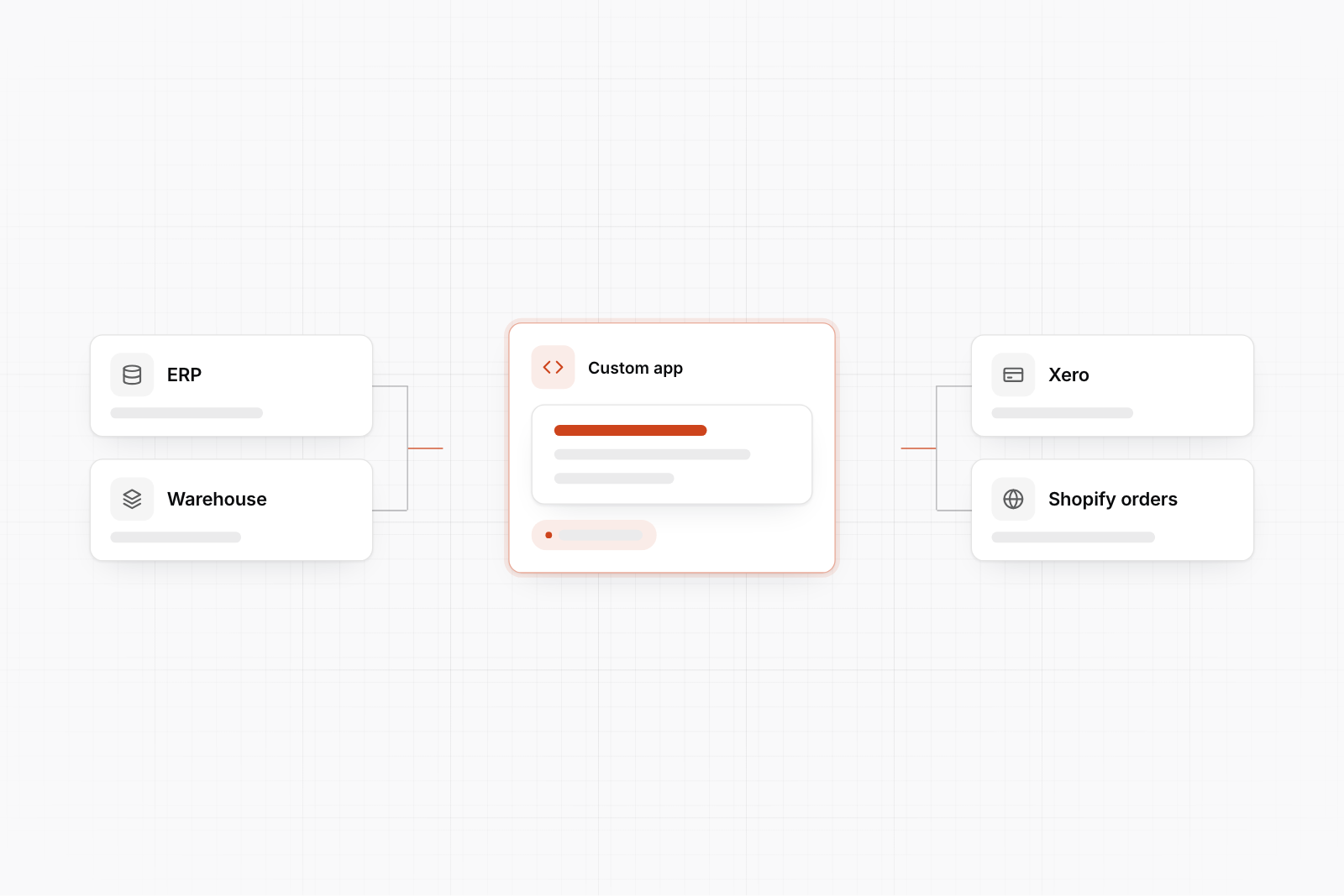
- Syncing with your ERP, warehouse or accounting system. Stock, orders, refunds and products moving both ways, with a log of every sync. This is integration work and rarely fits an installable app.
- Pricing and delivery rules. Trade pricing by customer, delivery rules by postcode or product, discounts that combine in ways the standard settings do not allow. Many of these are built as Shopify Functions inside a custom app.
- A workflow your staff run every day. Made-to-order products, approvals, packing that follows your own rules.
- Too many apps for one job. If you are chaining four or five apps and a spreadsheet to run one process, one app that does it properly is often cheaper and faster.
- Data you would rather keep away from third parties. A custom app only you install means no outside app developer holds your customer or order data.
A custom app built for one store is installed straight into your Shopify account. Since January 2026, new custom apps are created and managed in Shopify's Dev Dashboard and installed with a direct link. They do not go through App Store review, which saves weeks compared with a public app.
What a custom Shopify app costs and how long it takes
As a guide, a focused custom Shopify app or integration costs £3,000 to £15,000 and takes three to eight weeks. A single rule or small sync sits at the low end. An app with its own admin screens and two or three system integrations sits at the high end or above it.
Published pricing from UK and US developers is broadly similar. Single-purpose apps start around a few thousand pounds, and each extra integration with an ERP, warehouse or CRM adds to the bill. A public App Store app, built for many stores, costs much more because it needs billing, multi-store support and App Store review. A store that only needs an app for itself should not pay for any of that.
What pushes the price up:
- The number of systems involved. Each one has its own API, quirks and test data.
- Admin screens. An app your team works in needs design and more testing than one that runs in the background.
- Messy data. Product codes that do not match between Shopify and your stock system have to be cleaned or mapped first.
- Checkout changes. Checkout UI extensions on the checkout steps need Shopify Plus. Discount, delivery and payment rules can usually be built as Shopify Functions without it.
If the app has its own back end, add hosting. That is usually tens of pounds a month for a store-sized app.
Upkeep as Shopify changes its API
Every custom Shopify app needs planned upkeep because of Shopify API versioning. Shopify releases a new API version every quarter and supports each one for at least 12 months. That gives you roughly a year to move each app onto a newer version before the old one is retired.
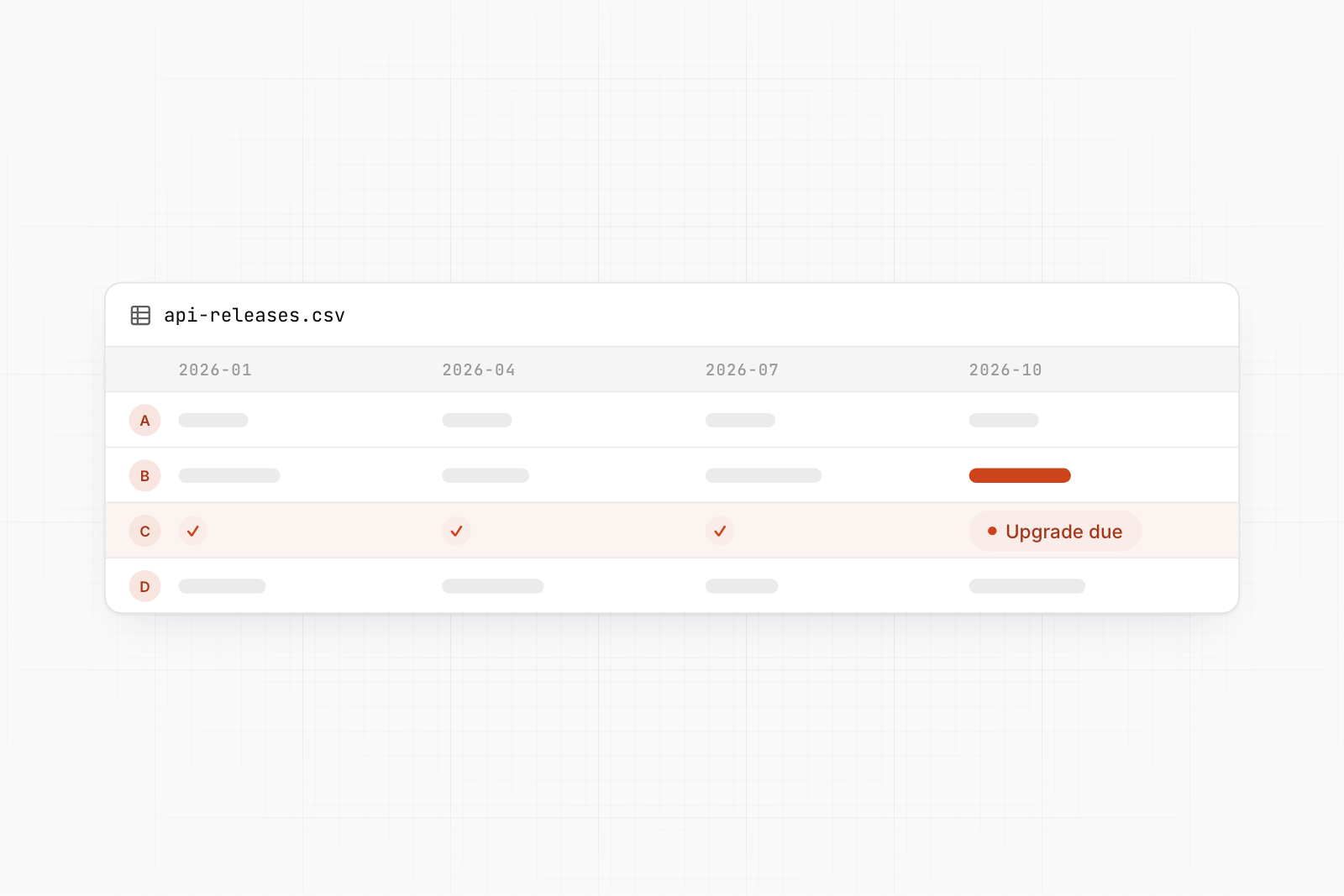
When an app asks for a version Shopify no longer supports, Shopify answers with the oldest version it still supports instead. Often nothing visible breaks. Sometimes a field your app relies on has been removed, and an order sync quietly goes wrong. Avoiding this is cheap: pin the version, read the release notes each quarter and upgrade once or twice a year.
Third-party estimates put annual upkeep at 15 to 25 per cent of the build cost, covering API upgrades, changes when your other systems change, and fixes. For a £10,000 app, budget £1,500 to £2,500 a year. With an App Store app, this is part of the monthly fee. With a custom app, you pay it yourself.
How to vet a UK Shopify developer for a custom app
Judge a custom Shopify app developer in the UK by what they have built, who will build yours, and what happens after launch. Ask every candidate the same questions so you can compare the answers.
- Ask whether an existing app would do. A good developer will name one if it exists. Be wary of one who recommends custom code for everything.
- Ask to see apps and integrations they have built, not only themes. Theme work and app work are different skills.
- Ask which API version their last app targets and how they handle the quarterly releases. A clear answer shows they plan for upkeep.
- Check who owns what. You should own the code, the repository, the app in your Shopify account and any hosting account, in writing.
- Ask how syncs are logged. For any integration, you want a record of each sync and an alert when one fails.
- Get a written scope, with exclusions and a price for upkeep after launch.
- Ask who covers absence. For a freelancer, find out what happens if they are unavailable when something breaks.
When we are not the right choice
We are not the right choice when an App Store app does the job for a monthly fee. If it covers most of what you need, install it. Paying us £5,000 to recreate a £20-a-month app makes no sense.
We are also the wrong fit if:
- You need a new theme or a storefront redesign. We build apps, integrations and migrations, and work alongside your designer. We do not design themes.
- The need is a simple rule on Shopify's own data. Set it up in Shopify Flow yourself, or ask us for an hour of advice rather than a build.
- You want ongoing marketing, ads or conversion work. We do not run those.
- You want to build a public app to sell on the App Store. That means running a product business with billing, support and App Store review, which needs a different plan from a single-store app.
Next step
If you are weighing an App Store app against a custom Shopify app, book a 30-minute video call. We will look at what you need and tell you if an existing app or Shopify Flow will do. If a custom app is the right answer, the next step is our £750 technical planning day (plus VAT). It ends with a written plan and a phased estimate in ranges, and the fee comes off the first invoice if the build starts within 60 days.
FAQ
FAQs
When does a Shopify store need a custom app?
A store needs a custom app when no App Store app covers most of the job, when Shopify has to sync with an ERP, warehouse or accounting system, or when several apps are being chained to run one process. If an existing app covers most of the need, try it first.
What is the difference between a custom app and a public app?
A custom app is built for one store and installed directly with a link from Shopify's Dev Dashboard. It does not go through App Store review. A public app is built to be listed on the App Store for many stores, so it needs billing, multi-store support and Shopify's review, which makes it much more expensive to build.
How much does a custom Shopify app cost in the UK?
As a guide, a focused custom app or integration costs £3,000 to £15,000 and takes three to eight weeks. Apps with their own admin screens and several integrations cost more. Add 15 to 25 per cent of the build cost a year for upkeep, plus hosting if the app has its own back end.
What happens to my app when an API version is no longer supported?
Shopify answers with the oldest version it still supports instead. Your app keeps running, but anything that relied on a removed or changed field can fail, sometimes without an obvious error. Upgrading once or twice a year, before each version's support ends, avoids this.
Should I hire a Shopify freelancer or an agency for a custom app?
A freelancer suits a single, well-defined app and costs less, but leaves you exposed if they are unavailable. An agency costs more and suits work with several integrations or ongoing change, because more than one person knows the code. Either way, make sure you own the code and the app.