Key takeaways
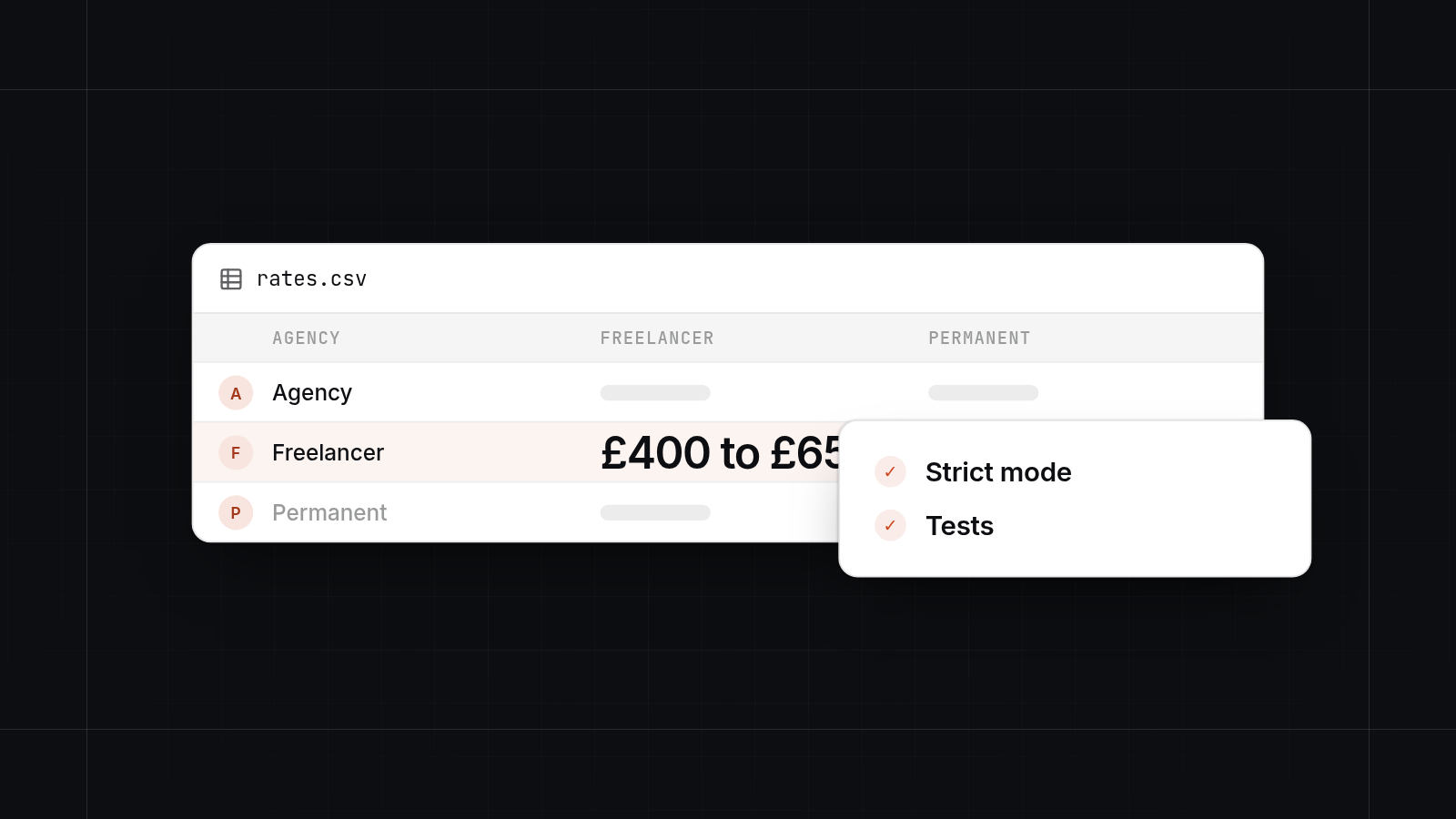
Freelance React and TypeScript contractors in the UK typically charge roughly £400 to £650 a day. Agencies charge more but cover design, testing and project management.
Choose by team size, how long the work will run and who owns the code afterwards.
Fixed price, time and materials and a retained monthly team each suit a different kind of work.
Before hiring anyone to work on an existing codebase, check strict TypeScript settings, state and data fetching, tests, bundle size, dependency age and setup time.
If you need a single contractor to sit in your team, we are probably not the right fit.
Hiring React and TypeScript developers in the UK comes down to three routes: an agency, freelancers or a permanent hire. An agency suits a defined project that needs design, testing and project management. A freelancer suits short, well-scoped work. A permanent hire suits steady development over several years. Which fits depends on team size, how long the work will run and who will own the code afterwards.
We are a Glasgow-based team that builds web applications in React and TypeScript. This post covers when each route fits, typical UK day rates, how the engagement models differ, and what to check in a codebase before anyone starts work on it. It also explains how we work and when we are not the right fit.
When to hire an agency, a freelancer or a permanent developer
Hire an agency for a defined project that needs several skills, a freelancer for small, well-scoped work, and a permanent developer if you will be changing the software steadily for years. Three questions sort most cases: how big a team do you need, how long will the work run, and who will own the code once it is built.
| Option | Suits | Watch for |
|---|---|---|
| Agency | A defined build or takeover needing design, development, testing and project management together | Higher day rates, and open-ended retainers with no ceiling |
| Freelancer | Short, well-defined work, or extra capacity for a team that already has a lead | No cover if they are ill or busy, and handover problems if one person holds all the knowledge |
| Permanent hire | Steady, ongoing development over many years | Months to recruit, salary and employer costs whether or not there is work, and one person's knowledge |
| AppBespoke | Custom web apps, customer portals, internal tools and APIs in React and TypeScript, with a fixed scope and full code ownership handed over | We do not supply a single contractor to sit inside your team, and we do not run large enterprise programmes |
Team size
One developer can build a small internal tool. A customer portal with several roles and integrations usually needs design, front-end, back-end and testing skills at once. If you have no technical lead, a single freelancer leaves nobody to review their decisions. An agency brings that review with it. If you already have a strong lead, a freelancer can add capacity cleanly.
How long the work will run
Work lasting a few weeks to a few months suits a freelancer or an agency, because you do not carry the cost afterwards. Work that will run for years suits a permanent hire, because the knowledge stays in the business. Recruiting takes months, so some teams use a freelancer or agency to start while they find the permanent hire. For a wider look at the trade-off, see our post on hiring a dev agency instead of an in-house team.
Who owns the code afterwards
Ownership matters more than which route you pick. Whichever you choose, you should own the code, the repository and the cloud accounts, and have that in writing. A freelancer who leaves with no documentation is as much of a risk as an agency that keeps the repository.
Typical UK day rates for React and TypeScript work
Freelance React and TypeScript contractors in the UK typically charge roughly £400 to £650 a day, with the higher end for senior people and specialist work. Agencies charge more per day. The extra covers design, testing and project management, which a freelancer does not provide.
Treat these as a guide, not a quote. London rates tend to sit above the rest of the UK, though remote work has narrowed the gap. Seniority, the stack around React and how urgent the work is all move the figure. For whole-project figures rather than day rates, see how much it costs to build a custom web application.
When you compare a freelancer's day rate with an agency's, compare what each includes. A freelancer at £500 a day may leave you to arrange design, testing and project management yourself. Those jobs still cost money, either as other people's time or as problems found late. Also check IR35 status with your accountant for any contractor engaged through a company, because it affects both sides.
Most rates on freelance marketplaces are hourly and in dollars. They cover a wide range of experience and are a poor guide to what a senior UK contractor charges.
Engagement models: fixed price, time and materials, and retained teams
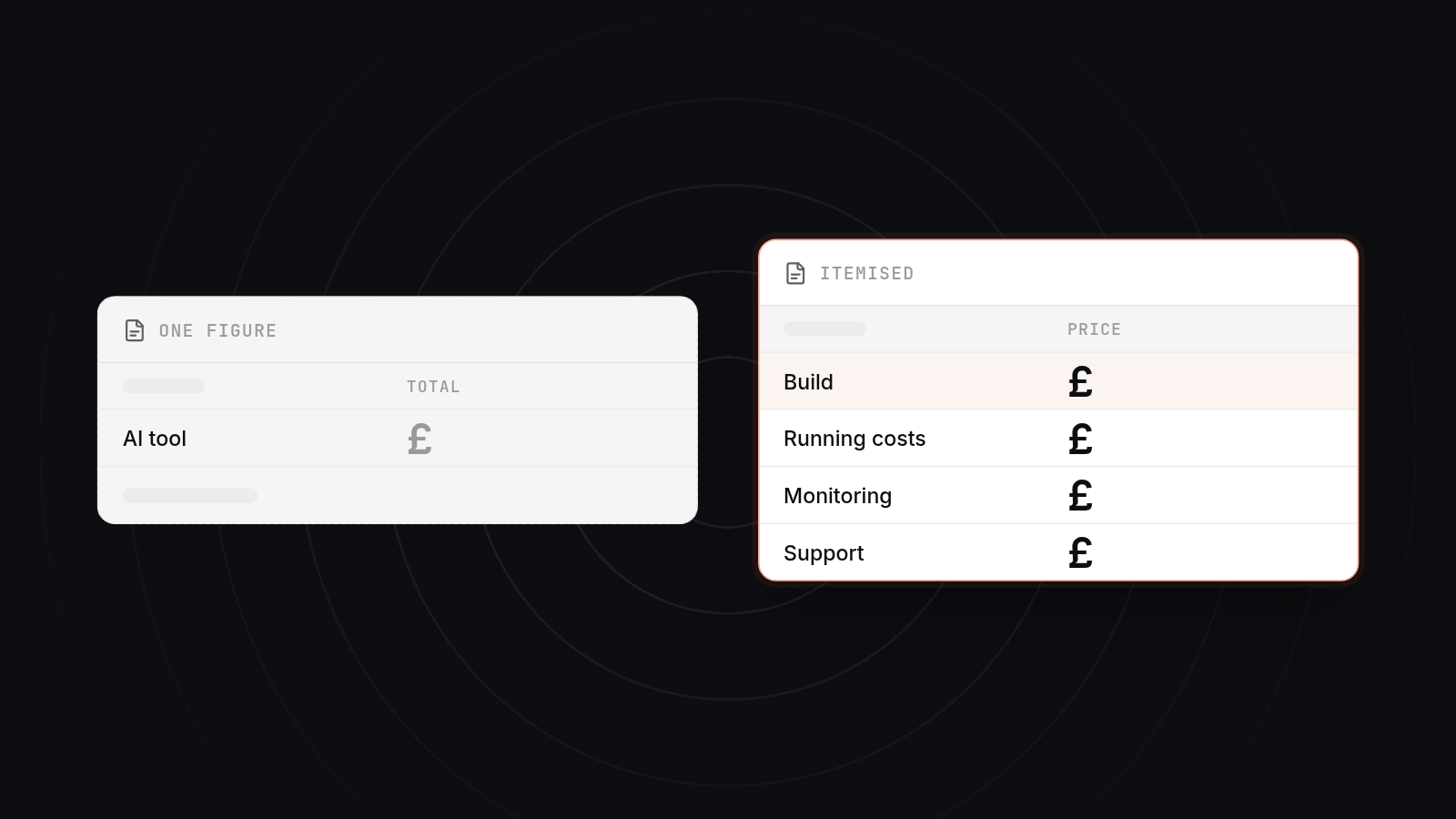
Fixed price gives a known cost for an agreed scope. Time and materials gives flexibility without a ceiling. A retained monthly team gives steady capacity for ongoing work. Each suits a different stage of a product.
Fixed price
You agree the scope and the price before work starts. It suits a focused first version, because both sides have to settle what is being built. Changes in scope are quoted separately. It works best when the scope is written down and the integrations and roles are listed.
Time and materials
You pay for the time spent. It suits exploratory work, early prototypes and tasks where the scope will change as you learn. Without a cap, you carry the risk of costs growing. If you choose it, ask for a cap and a weekly report on spend.
Retained monthly team
You pay a monthly amount for an agreed amount of capacity. It suits live products that need steady change, such as new features, fixes and upgrades. It works well after a fixed-price first release. Check that you can stop it with reasonable notice and that you agree up front how unused time is handled.
What to check in a React and TypeScript codebase before hiring anyone
Before hiring anyone to work on an existing React and TypeScript codebase, check six things: TypeScript strictness, state and data fetching, test coverage, bundle size and load times, dependency age, and how easily a new developer can run it. These show how expensive the code will be to change, and what to ask a contractor or agency to fix first.
Strict TypeScript settings
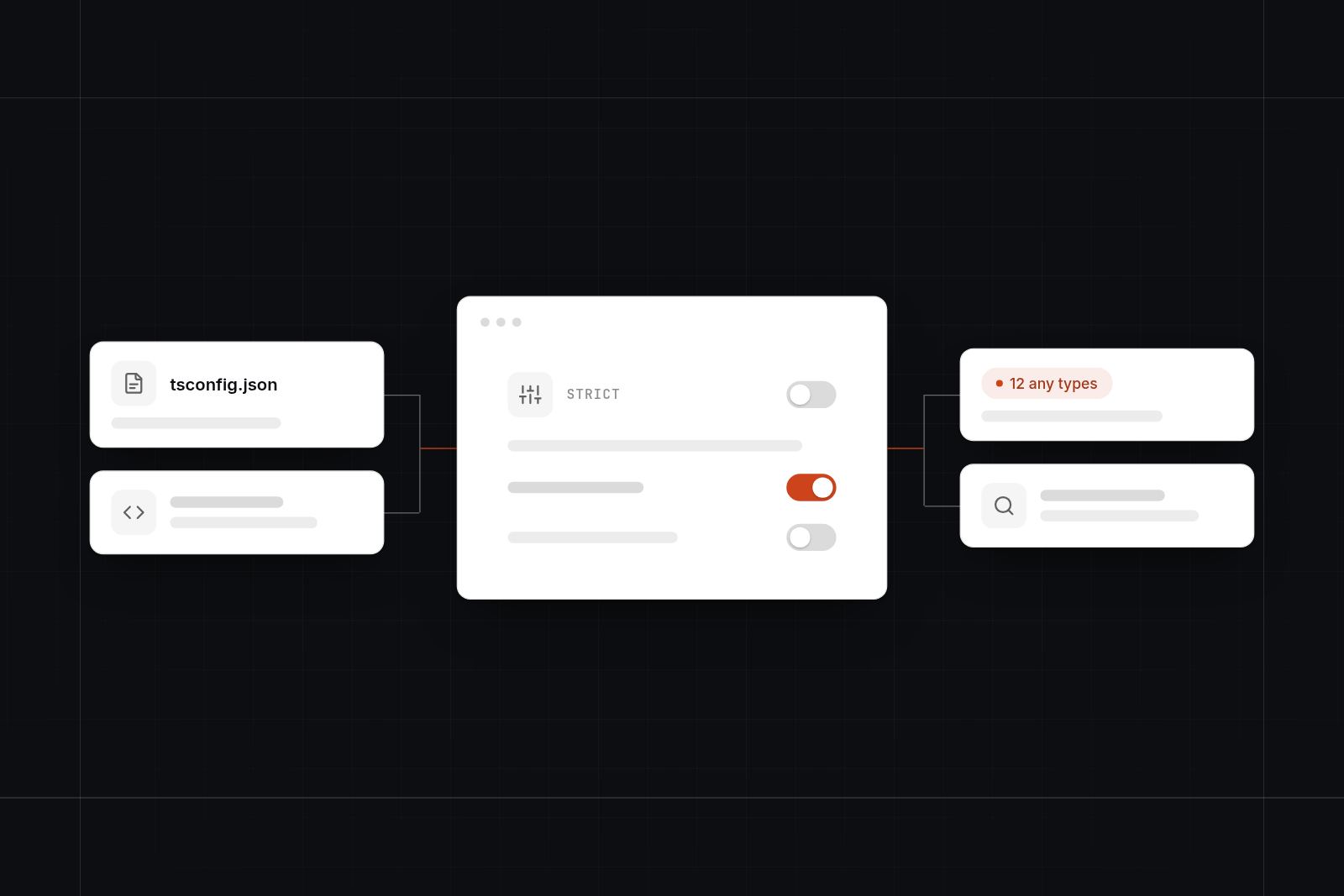
Open the TypeScript configuration and look for strict mode. With it off, the compiler lets many errors through, and the types protect you less than they appear to. Search for how often any and type assertions are used. A few are normal. Hundreds suggest the types were added to silence the compiler rather than to describe the data. Turning strict mode on in an old codebase usually surfaces many errors, so ask for an estimate of how long fixing them takes.
How state and data fetching are handled
Look at where data comes from and where it lives. A healthy codebase has a clear approach: one way of fetching data, one place for server data and a clear line between that and local interface state. A messy one mixes several approaches, copies server data into global state and repeats the same fetching code in many components. Ask the current developer why each choice was made. A reasoned answer is a good sign.
Test coverage
Check whether tests exist, whether they run and whether they pass. A coverage percentage matters less than whether the important flows are tested, such as login, payments and the main workflow. Without tests, every change is a risk, and a new developer has no way of knowing what they broke.
Bundle size and load times
Run the application through a browser performance tool and look at the bundle size and load times on an ordinary connection. Large bundles often come from importing whole libraries for one function or loading every page up front. Slow load times cost you users. Fixing them tends to be a defined piece of work rather than a rewrite.
Dependency age
Look at the package list and see how many dependencies are well out of date, especially React itself, the build tool and anything that handles authentication or security. Run the audit command to check for known vulnerabilities. A few old packages are routine. A codebase several major versions behind needs upgrade work before new features, and that work should be priced. If the code is in worse shape than that, our post on modernizing a legacy web application without a rewrite covers the options.
How easily a new developer can get it running
Ask someone who has not seen the project to clone it and run it using only the documentation. Time how long it takes. If setup takes more than an hour or two, or needs help from the original developer, the project depends too much on one person's memory. A clear readme, a sample environment file and a working local setup are signs of care.
How AppBespoke works, from planning day to handover
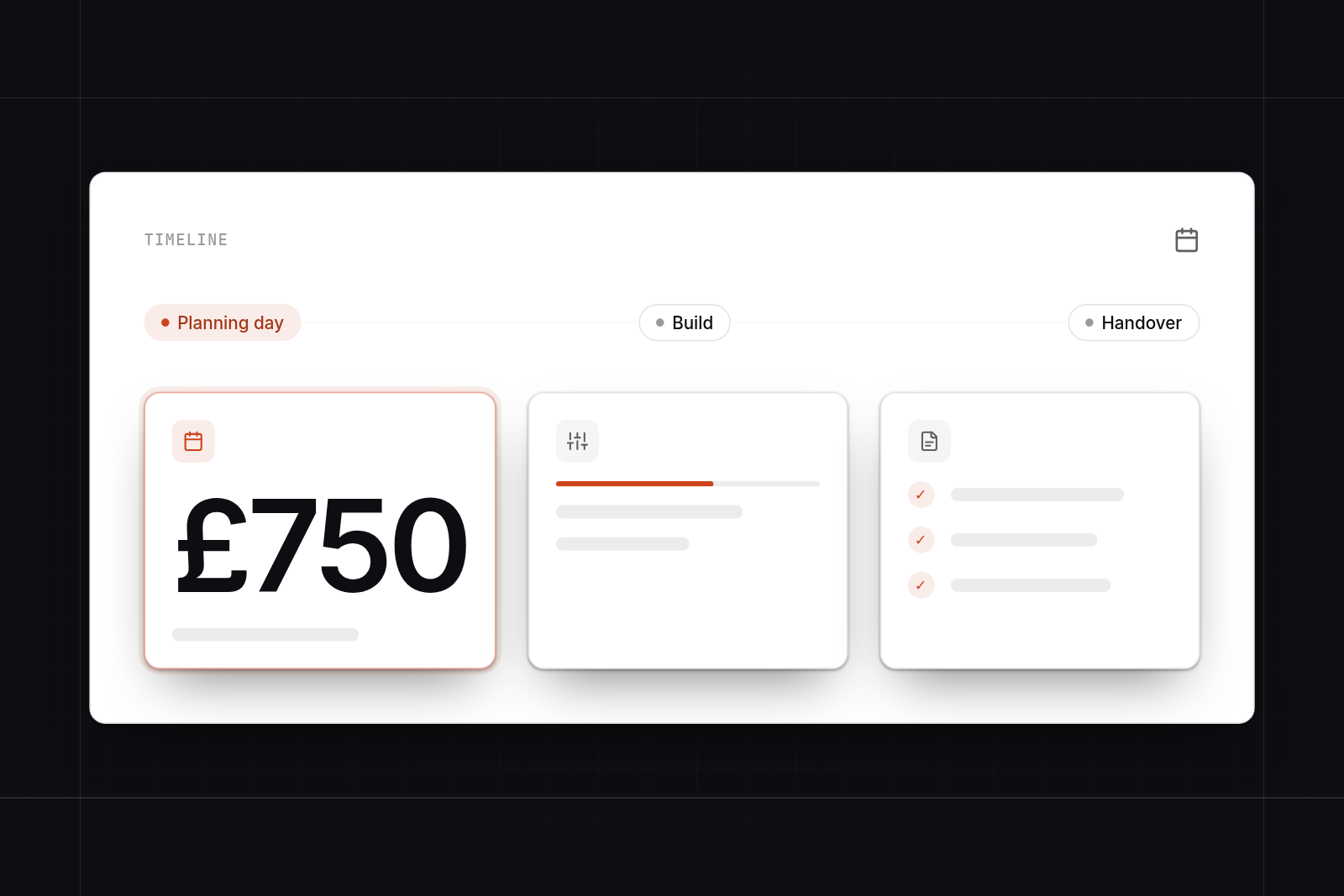
We start with a technical planning day, move to a fixed-scope build, and finish with a full handover of the code and accounts. The process is the same whether we are building a new React and TypeScript application or taking over an existing one. Our React and TypeScript development service page has more detail.
Technical planning day
The technical planning day costs £750. If there is an existing codebase, we review it using the checks above. We also agree the scope, roles, integrations and risks. You leave with a written plan you can use with us or with anyone else.
Build
We quote a fixed price for the first phase, based on the plan. Work happens in short cycles, and you see working software throughout rather than only at the end. A focused first version usually takes 8 to 16 weeks. A simple internal tool can be quicker.
Handover
At the end, you own the code, the repository and the cloud accounts. We provide documentation, and a new developer should be able to get the project running from it. Running a custom application typically costs 15% to 25% of the build cost each year, and we will say what ours covers before you sign. For a fuller breakdown, see the cost to maintain a custom web application per year.
When we are not the right fit
We are probably not right if you need one contractor to join your existing team for a few months, if you want a large offshore team, or if you are running a large enterprise programme with several vendors. In those cases, a freelancer, a recruiter or a larger firm will serve you better. We would rather say so on the first call.
Next step
If you are deciding between an agency, freelancers and a permanent hire, book a 30-minute video call with us. We will talk through your team, timeline and codebase, and say plainly whether we are the right fit. If we are, the next step is our £750 technical planning day.
FAQ
FAQs
What is the typical day rate for a React and TypeScript contractor in the UK?
Roughly £400 to £650 a day for freelancers, with senior and specialist people at the upper end. Agencies charge more, and that covers design, testing and project management. These are guides, so ask each supplier what is included.
Should I hire an agency or a freelancer for a React project?
Hire a freelancer for small, well-defined work, or when you already have a technical lead to guide them. Hire an agency when the project needs several skills together, when you have no technical lead or when you want someone accountable for the whole result. Whichever you choose, get ownership of the code in writing.
What should I check in a React and TypeScript codebase before hiring?
Check strict TypeScript settings, how state and data fetching are handled, test coverage, bundle size and load times, the age of dependencies, and how easily a new developer can run the project. These tell you how costly the code will be to change.
Is a fixed price or time and materials better for React development?
Fixed price suits a focused first version with a written scope. Time and materials suits exploratory work where the scope will change. If you choose time and materials, ask for a cap and a weekly report on spend.